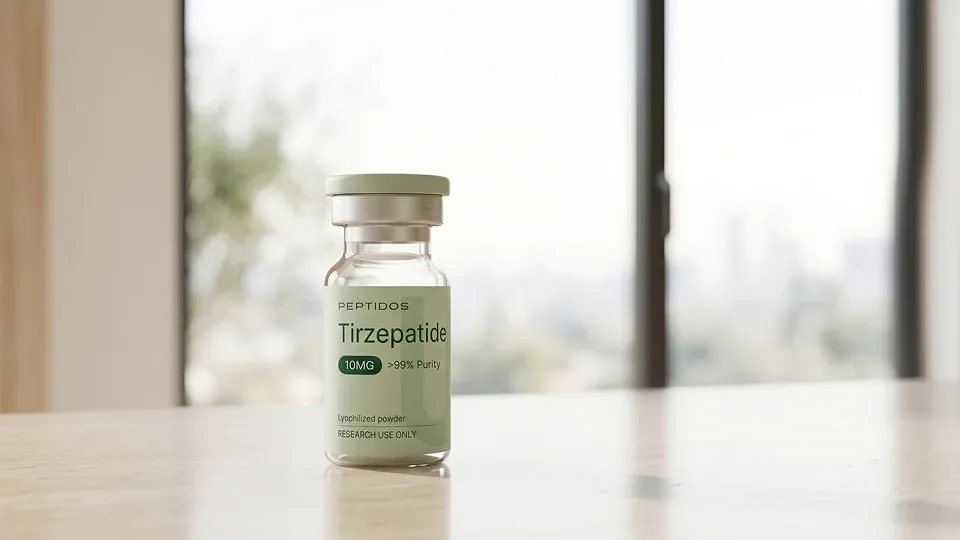
Melanotan II (MT-2): The Science, History, and Safety Profile — Research Summary 2026
A research-based look at one of the most scientifically important — and most controversial — peptides ever synthesized, including how it works, what decades of evidence actually shows, and the serious safety questions that have kept it from ever being approved.
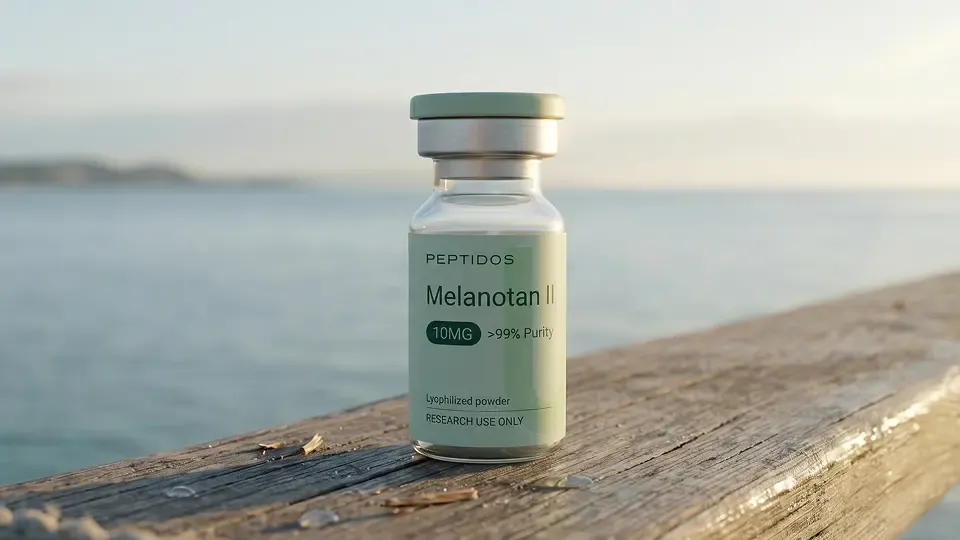
In the late 1980s, a pharmacology professor at the University of Arizona named Mac Hadley made a dosing error. He was working on a synthetic peptide his team had just designed — a small molecule meant to mimic the body's own pigmentation hormone. The plan was elegant: give people a way to develop a protective tan without the UV exposure that causes skin cancer. Hadley injected himself with what he thought was a standard test dose. He had actually given himself twice that.
What happened next has been told and retold in pharmacology lectures ever since. He got nauseous. He started yawning uncontrollably. And he developed an erection that lasted about eight hours.
That accident — one doubled dose in one researcher — is the reason Melanotan II shows up in your search results today. It's also, indirectly, why a different drug now sits on pharmacy shelves with FDA approval, treating low sexual desire in women. The story of MT-2 is one of the stranger arcs in modern peptide pharmacology, and it's worth understanding properly before reading anything else about it.
MT-2 was born from a real medical idea
In the 1980s, melanoma rates in fair-skinned populations were climbing in a way that worried oncologists. The biggest risk factor was clear: UV exposure, especially the sunburn-tan cycle that pale-skinned people put themselves through trying to tan. The Arizona team — chemist Victor Hruby together with Hadley and oncologist Robert Dorr — wondered whether they could short-circuit that loop pharmacologically. If you could induce skin pigmentation without the UV, you might meaningfully reduce skin cancer rates in exactly the population most at risk.
Their starting point was alpha-melanocyte-stimulating hormone, or α-MSH — a small peptide your pituitary gland already makes that tells skin pigment cells to produce more melanin. The problem with α-MSH itself as a drug is that it's fragile; enzymes shred it within minutes. So the Arizona group redesigned it. They trimmed it, swapped a couple of amino acids, and looped the molecule into a closed ring. The result was a seven-amino-acid cyclic peptide that was both far more stable and substantially more potent than the natural hormone. They named it Melanotan II.
What Melanotan II actually does inside the body
To grasp why MT-2 produces so many effects at once — tanning, appetite suppression, sexual arousal, increased oiliness in the skin, all from one shot — you need a quick map of the receptor system it activates.
Humans have five melanocortin receptors, labeled MC1R through MC5R. Each one handles a different job. MC1R sits on skin pigment cells and triggers melanin production. MC3R and MC4R live mostly in the brain and regulate hunger, energy expenditure, and sexual arousal. MC5R is in glands like the sebaceous glands that lubricate skin, and is involved in inflammation. MC2R is the adrenal stress receptor — conveniently, MT-2 mostly leaves it alone.
Most modern drugs aim for one receptor at a time. MT-2 hits four. That's its defining feature and its defining problem in one sentence: it's a master switch, not a precision tool. You can't activate just the tanning pathway. Appetite, sexual response, and oil glands come along for the ride.
The trials, the side effects, and the pivot
Once the accidental sexual effects became reproducible — Wessells and colleagues at Arizona later ran a controlled trial showing erectile response in 17 of 20 men with ED — the research priority shifted. A non-selective melanocortin agonist with strong sexual effects suddenly looked more interesting than a slow-acting tanning drug.
But the human trials kept running into the same walls. Onset took around two hours, which is impractical for sexual medicine. And the pigmentation side effects, which had been the entire point in tanning research, became a liability in any other indication.
In 2000, Palatin Technologies — the pharmaceutical company that had licensed MT-2 — gave up on the molecule itself. Instead, they took a metabolite of MT-2, modified it to reduce MC1R activity (the pigmentation receptor) while preserving MC4R activity (the sexual arousal receptor), and developed that as a separate compound. They called it bremelanotide, eventually approved by the FDA in 2019 under the brand name Vyleesi for hypoactive sexual desire disorder in premenopausal women.
A chemically related peptide from the same Arizona lineage, afamelanotide (sold as Scenesse), was approved that same year for erythropoietic protoporphyria — a rare disorder in which sunlight causes severe pain.
So the MT-2 research program produced two FDA-approved drugs. Just not MT-2.
What happened next was not in anyone's plan
Sometime in the early 2000s, MT-2 leaked. Synthesis routes were public, Chinese chemical suppliers picked it up, and bodybuilding forums started circulating dosing protocols. By the late 2000s, you could buy vials online.
This was unplanned, unwelcome by the original researchers. And because MT-2 had never completed large-scale human trials, very little long-term safety data existed at the moment when thousands of people started injecting it for cosmetic reasons.
What's followed since is a slow accumulation of case reports in the dermatology and emergency medicine literature. No single one of them is definitive.
The most-discussed signal is melanoma. Multiple papers — in the BMJ, the British Journal of Dermatology, Dermatology, and elsewhere — document melanomas appearing in or near existing moles in MT-2 users, sometimes within months of starting the peptide. The proposed mechanism is straightforward: MT-2 strongly drives melanocyte activity, and sustained high-amplitude stimulation of any cell type creates conditions for abnormal proliferation.
Beyond melanoma, the case literature includes:
The regulatory verdict
Roughly forty years after MT-2 was first synthesized, no regulator anywhere has approved it.
The FDA has not authorized sale. The UK's MHRA has banned it. Australia's TGA has issued explicit consumer warnings and restricted import. The EU treats it as an unlicensed medicine. The original clinical development program ended around 2000, and nothing has restarted it.
What's worth taking from the MT-2 story
MT-2 is, on the science side, one of the most consequential peptides ever made. It essentially opened up the field of melanocortin pharmacology. The descendants of the Arizona work include approved treatments for sexual dysfunction, a rare photosensitivity disorder, and a genetic obesity disorder. As a laboratory tool for receptor research, MT-2 is still genuinely useful.
References
- Hadley, M.E. & Dorr, R.T. (2006). "Melanocortin peptide therapeutics: historical milestones, clinical studies and commercialization." Peptides, 27(4), 921–930. PMID: 16412534.
- Wessells, H. et al. (2000). "Effect of an alpha-melanocyte stimulating hormone analog on penile erection and sexual desire in men with organic erectile dysfunction." Urology, 56(4), 641–646.
- Wessells, H. et al. (2000). "Melanocortin receptor agonists, penile erection, and sexual motivation: human studies with Melanotan II." International Journal of Impotence Research, 12 (Suppl 4), S74–79.
- Dorr, R.T. et al. (1996). "Evaluation of melanotan-II, a superpotent cyclic melanotropic peptide in a pilot phase-I clinical study." Life Sciences, 58(20), 1777–1784.
- Hjuler, K.F. & Lorentzen, H.F. (2014). "Melanoma associated with the use of melanotan-II." Dermatology, 228(1), 34–36.
- Paurobally, D. et al. (2011). "Melanotan-associated melanoma." British Journal of Dermatology, 164(6), 1403–1405.
- Cousen, P., Colver, G. & Helbling, I. (2009). "Eruptive melanocytic naevi following melanotan injection." British Journal of Dermatology, 161(3), 707–708.
- Langan, E.A. et al. (2009). "Change in moles linked to use of unlicensed 'sun tan jab'." BMJ, 338, b277.
- Mallory, C.W. et al. (2021). "Melanotan tanning injection: a rare cause of priapism." Sexual Medicine, 9(1), 100298.
- Peters, B. et al. (2020). "Melanotan II: a possible cause of renal infarction — review of the literature and case report."
- Alsabbagh, A.Y. et al. (2025). "Melanotan II nasal spray: a possible risk factor for oral mucosal malignant melanoma?" Journal of Cranio-Maxillofacial Surgery.
- Therapeutic Goods Administration (Australia) (2025). "Don't risk using tanning products containing melanotan." TGA Safety Advisory.
Author

Peptidos
Research Team
We are a Scandinavian longevity research team with 15+ years of combined experience studying peptides' role in aging, cellular health, muscle growth, and cognitive performance.
Sign up to our newsletter
Related articles
GHK-Cu Peptide Research: Benefits, Effects, and Risks Explained
Retatrutide Explained: Mechanism, Trial Data, and What It Means for Metabolic Health in 2026