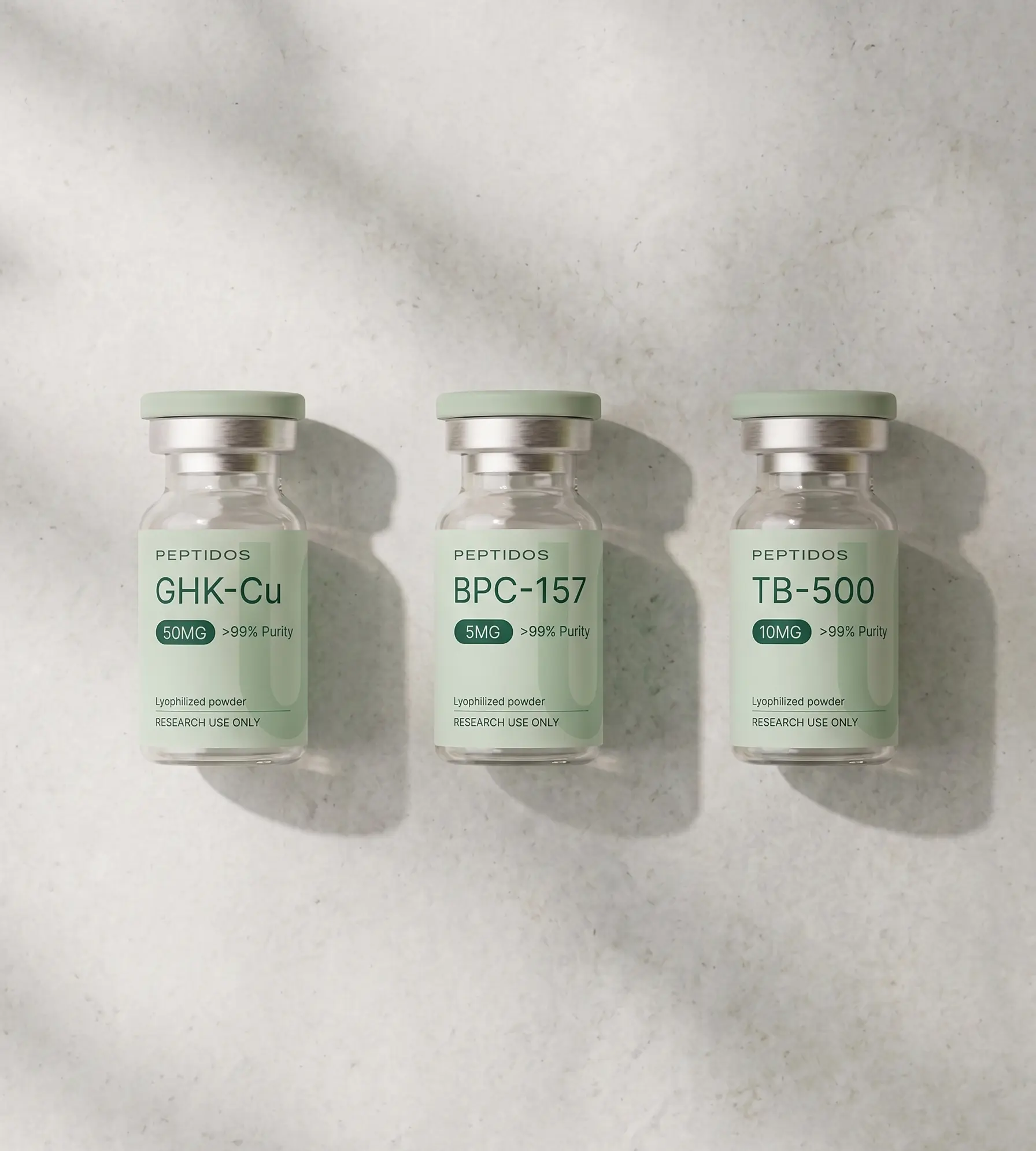
TB-500
Synthetic peptide fragment derived from the active region of Thymosin Beta-4, extensively studied for its role in actin regulation, angiogenesis, and tissue regeneration research.
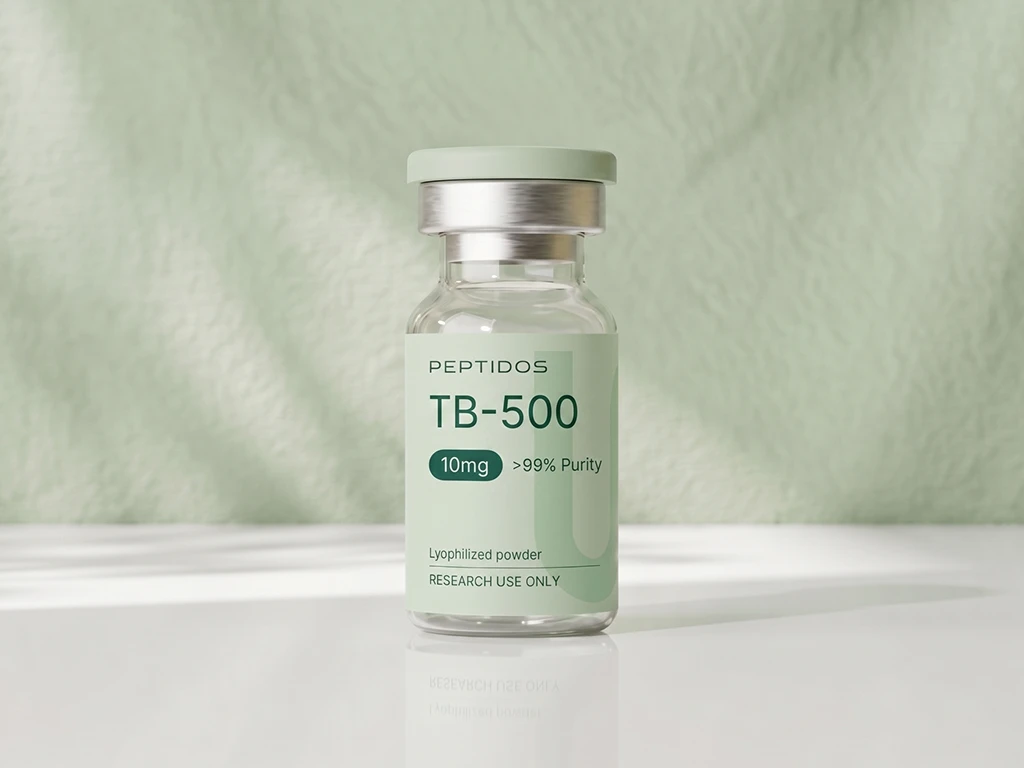
What Is TB-500?
TB-500 is a synthetic peptide based on the active region of Thymosin Beta-4 (Tβ4), a naturally occurring 43-amino acid protein found in nearly all human and animal cells. The compound corresponds to the short LKKTETQ sequence responsible for much of Tβ4's biological activity, particularly its interaction with the cytoskeletal protein G-actin. As a research compound, TB-500 has gained substantial scientific interest for its regenerative, cytoprotective, and pro-angiogenic properties, extensively documented in preclinical animal and cellular models.
Its underlying biological role relates to actin sequestration, cell migration, and modulation of inflammatory and reparative signaling. Studies indicate that TB-500 promotes endothelial cell migration, new blood vessel formation, and accelerated tissue remodeling — processes central to the repair of muscle, skin, cardiac, corneal, and neural tissues (Goldstein et al., 2005).
Mechanism of Action
TB-500 is studied for its ability to bind and sequester G-actin, regulating actin polymerization and enabling cell motility, a process essential to tissue repair (Goldstein et al., 2005). It is also reported to upregulate VEGF expression and promote endothelial cell migration, supporting angiogenesis and microvascular network formation (Philp et al., 2004). Additional research describes activation of integrin-linked kinase (ILK) and Akt signaling, contributing to cell survival, migration, and structured tissue regeneration (Bock-Marquette et al., 2004).
Research Use Only
TB-500 supplied by Peptidos.eu is intended exclusively for laboratory and scientific research. It is not approved for human or animal consumption and must not be used as a medicine or diagnostic tool.
- Chemical name
- TB-500 (Thymosin Beta-4 Fragment 17–23, N-acetylated)
- Purity
- 99.771%
- Molecular formula
- C₃₈H₆₈N₁₀O₁₄
- Amino acid sequence
- Ac-Leu-Lys-Lys-Thr-Glu-Thr-Gln (Ac-LKKTETQ)
- CAS number
- 885340-08-9
- Molecular weight
- 889.02 g/mol
- Number of amino acids
- 7
- Appearance
- White to off-white lyophilized powder.
- Solubility / reconstitution
- Highly water-soluble. Reconstitute in bacteriostatic water; dissolves readily to a clear, colorless solution.
- Storage
- Stable for 36 months (lyophilized, 2–8 °C). After reconstitution store at 4 °C and use within ~2 weeks.
Injury RecoveryHeart HealthMuscle Growth8 min read
TB-500: The "Repair Peptide" - Research Summary 2026
An evidence-based exploration of one of the most researched regenerative peptides in science - examining its potential benefits, risks, and what the current data actually shows in 2026.
Injury RecoveryGut HealthMuscle Growth7 min read
BPC-157 vs TB-500 for Recovery: What the Research Actually Says
If you've spent any time in fitness, biohacking, or sports medicine circles lately, you've probably run into two names being thrown around like cures for every nagging injury: BPC-157 and TB-500.
- Goldstein, A. L., Hannappel, E., & Kleinman, H. K. (2005). Thymosin β4: actin-sequestering protein moonlights to repair injured tissues. Trends in Molecular Medicine, 11(9), 421–429.
- Bock-Marquette, I., et al. (2004). Thymosin β4 activates integrin-linked kinase and promotes cardiac cell migration, survival and cardiac repair. Nature, 432(7016), 466–472.
- Smart, N., et al. (2007). Thymosin β4 induces adult epicardial progenitor mobilization and neovascularization. Nature, 445(7124), 177–182.
- Malinda, K. M., et al. (1999). Thymosin β4 accelerates wound healing. Journal of Investigative Dermatology, 113(3), 364–368.
- Philp, D., et al. (2004). Thymosin β4 promotes angiogenesis, wound healing, and hair follicle development. Mechanisms of Ageing and Development, 125(2), 113–115.
- Sosne, G., et al. (2002). Thymosin β4 promotes corneal wound healing and modulates inflammatory mediators in vivo. Experimental Eye Research, 74(2), 293–299.
- Crockford, D., et al. (2010). Thymosin β4: structure, function, and biological properties supporting current and future clinical applications. Annals of the New York Academy of Sciences, 1194(1), 179–189.
- Morris, D. C., et al. (2010). Thymosin β4 improves functional neurological outcome in a rat model of embolic stroke. Neuroscience, 169(2), 674–682.
- Xing, Y., et al. (2016). Thymosin β4 attenuates LPS-induced inflammatory responses through inhibiting MAPK and NF-κB signaling pathways. Toxicology and Applied Pharmacology.
- Kleinman, H. K., & Sosne, G. (2016). Thymosin β4 promotes dermal healing. Vitamins and Hormones, 102, 251–275.
Disclaimer
The products offered by peptidos.eu are intended exclusively for research and laboratory use and are sold only to qualified professionals, institutions, or authorized entities. These products are not intended for human or veterinary consumption, nor for any application involving living organisms, including — but not limited to — diagnostic, therapeutic, or recreational purposes.
By Making a Purchase, the Customer Declares that:
They are a qualified professional or entity, possessing the necessary competence, training, and facilities for the safe handling of chemical reagents;
They will use the product in full compliance with all applicable local, national, and European Union laws and regulations;
They will adopt appropriate safety measures during all stages of handling, storage, and disposal.
Prohibited Uses
The product must not be used as an Active Pharmaceutical Ingredient (API) in the manufacturing or preparation of medicines intended for humans or animals;
Any direct administration or use on humans or animals is strictly prohibited;
Peptidos.eu does not endorse or permit the use of its products for the production, testing, or development of illegal substances.
Liability
The purchaser assumes full responsibility for the handling, storage, and use of the product in safe conditions and in compliance with the law.
Peptidos.eu shall not be held liable for any direct or indirect damages arising from improper use, incorrect storage, or unauthorized use of the product.
Peptidos.eu reserves the right to refuse the sale to any individual or entity suspected of improper use of its products.
In case of doubts regarding the safe and lawful use of the product, it is recommended to consult a qualified professional experienced in laboratory research.
Regulatory Compliance
Peptidos.eu does not claim or imply that its products are approved by the European Medicines Agency (EMA), the Food and Drug Administration (FDA), or any other regulatory authority. All information provided is for informational and scientific purposes only. These products are not intended to diagnose, treat, cure, or prevent any disease.
Related products
The European Standard for Research Peptides
Born in Scandinavia. Built on the principle that research-grade means exactly that. Why researchers choose Peptidos:
- High purity
- Batch-to-batch consistency
- Most comprehensive testing available
- Professional support from people who understand