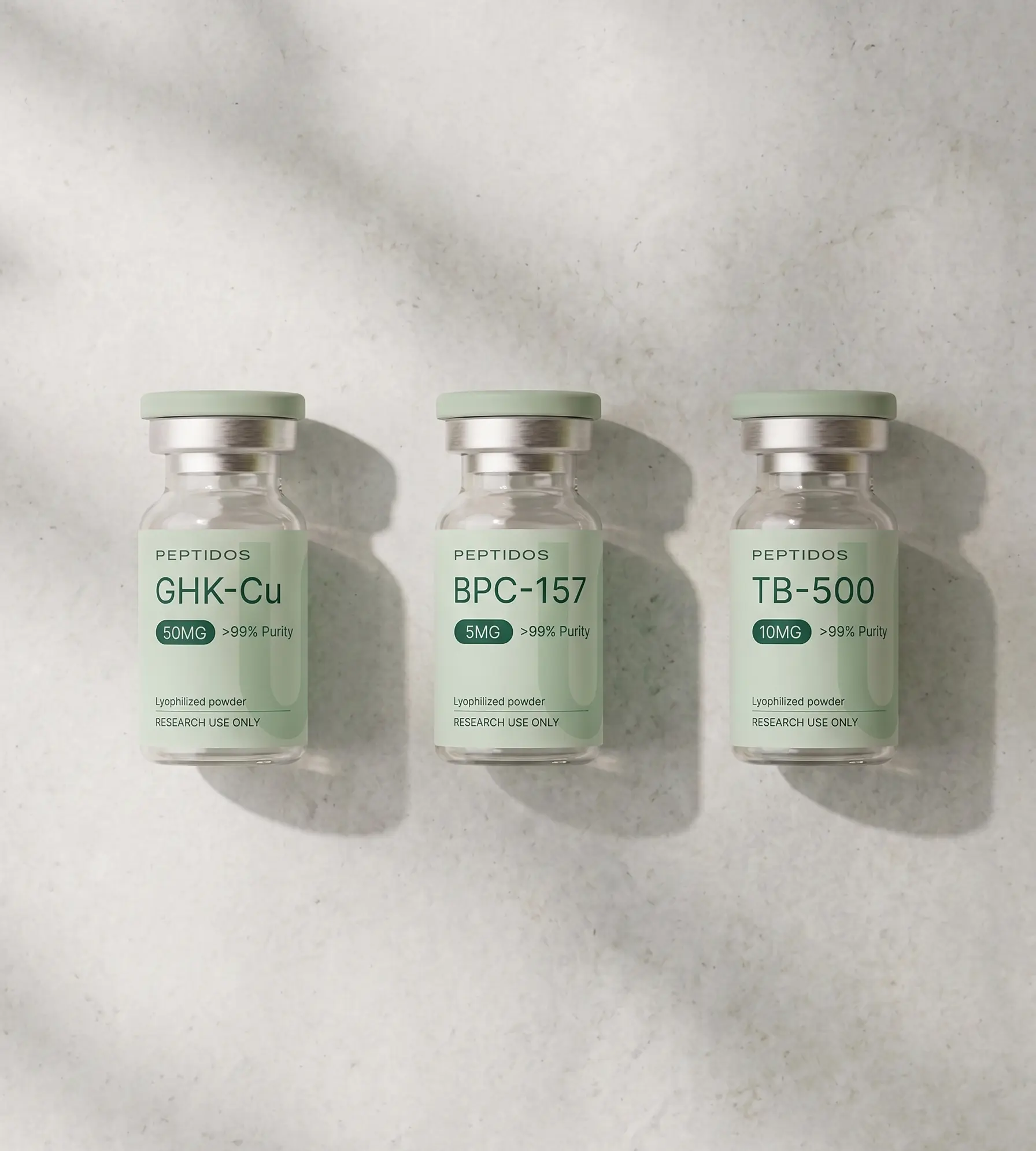
BPC-157
Pentadecapeptide sintetico derivato da una sequenza protettiva presente nel succo gastrico umano, ampiamente studiato per il suo ruolo nella riparazione tissutale e nella ricerca rigenerativa.
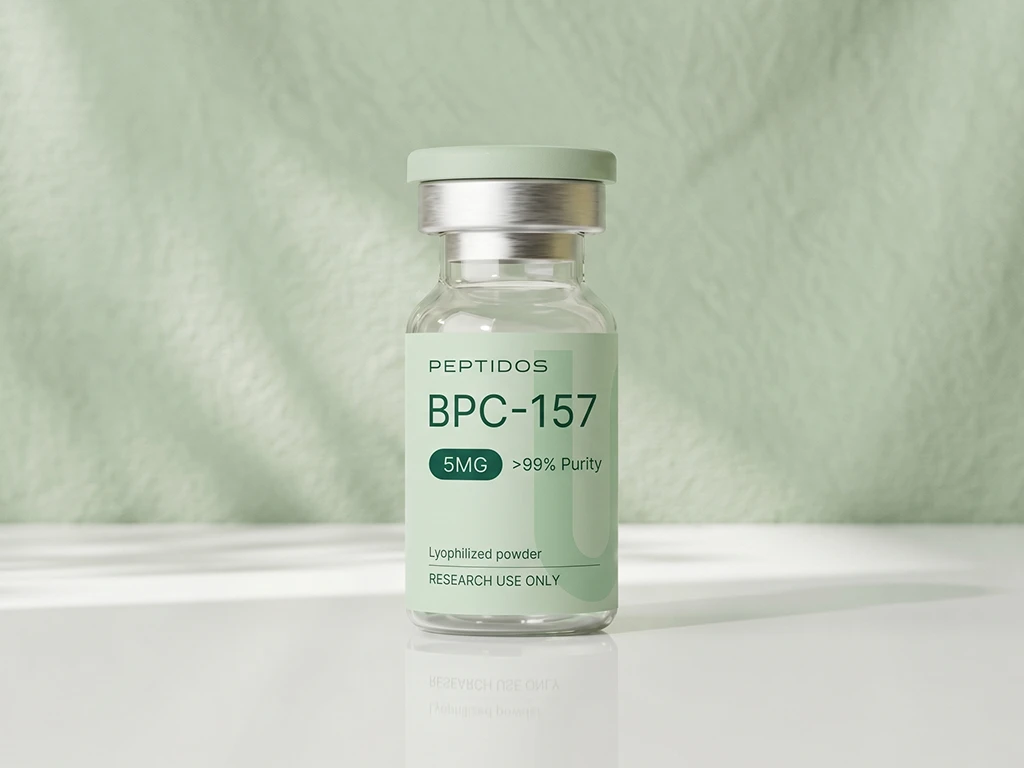
Cos'è il BPC-157?
Il BPC-157 (Body Protection Compound-157) è un peptide sintetico composto da 15 amminoacidi, derivato in parte da una sequenza protettiva naturalmente presente nei succhi gastrici umani. In quanto composto destinato alla ricerca, ha suscitato un notevole interesse scientifico per le sue proprietà citoprotettive e rigenerative, ampiamente documentate in modelli preclinici animali e cellulari.
Il suo ruolo biologico fondamentale è legato al mantenimento dell'integrità della mucosa gastrointestinale e al supporto dei naturali meccanismi di guarigione dell'organismo. Gli studi indicano che il BPC-157 promuove la proliferazione dei fibroblasti, la formazione di nuovi vasi sanguigni e la sintesi del collagene: processi centrali per la riparazione di muscoli, tendini, legamenti e tessuti mucosi (Staresinic et al., 2003).
Meccanismo d'azione
Il BPC-157 viene studiato per la sua capacità di stimolare l'angiogenesi — la formazione di nuovi vasi sanguigni — attraverso l'attivazione del recettore VEGFR2 e la modulazione della via di segnalazione Akt/eNOS (Chang et al., 2010; Hsieh et al., 2017). Favorisce inoltre la migrazione dei fibroblasti e la deposizione della matrice extracellulare, supportando una guarigione più rapida e strutturata.
Uso esclusivo per ricerca scientifica
Il GHK-Cu fornito da Peptidos.eu è destinato esclusivamente alla ricerca scientifica e di laboratorio. Non è approvato per il consumo umano o animale e non deve essere in alcun modo utilizzato come farmaco o strumento diagnostico.
- Denominazione chimica
- BPC-157 (Body Protection Compound Peptide)
- Purezza
- 99.782%
- Formula molecolare
- C₆₂H₉₈N₁₆O₂₂
- Sequenza amminoacidica
- Gly-Glu-Pro-Pro-Pro-Gly-Lys-Pro-Ala-Asp-Asp-Ala-Gly-Leu-Val
- Numero CAS
- 137525-51-0
- Peso molecolare
- 1419.53 g/mol
- Numero di amminoacidi
- 15
- Aspetto
- Polvere liofilizzata di colore da bianco a biancastro.
- Solubilità / ricostituzione
- Altamente idrosolubile. Ricostituire in acqua batteriostatica; si dissolve rapidamente formando una soluzione limpida.
- Conservazione
- Stabile per 36 mesi (allo stato liofilizzato, a 2–8 °C). Dopo la ricostituzione, conservare a 4 °C per un massimo di 2 settimane (≤ 2 settimane).
Recupero InfortuniCrescita MuscolareSalute Intestinale7 min di lettura
BPC-157: Il "Composto di Protezione Corporea" — Panoramica della Ricerca 2026
Uno sguardo basato sulla ricerca scientifica su uno dei peptidi più discussi nel mondo della salute e del recupero: benefici potenziali, rischi e ciò che la scienza ancora non sa nel 2026.
Recupero InfortuniSalute IntestinaleCrescita Muscolare7 min di lettura
BPC-157 vs TB-500 per il recupero: cosa dice veramente la ricerca
Se ultimamente hai frequentato gli ambienti del fitness, del biohacking o della medicina dello sport, probabilmente ti sarai imbattuto in due nomi che vengono proposti come cure miracolose per ogni infortunio fastidioso: BPC-157 e TB-500.
- Staresinic, M., et al. (2003). Gastric pentadecapeptide BPC 157 accelerates healing of transected rat Achilles tendon and in vitro stimulates tendocytes growth. Journal of Orthopaedic Research, 21(6), 976–983.
- Chang, C. H., et al. (2011). The promoting effect of pentadecapeptide BPC 157 on tendon healing involves tendon outgrowth, cell survival, and cell migration. Journal of Applied Physiology, 110(3), 774–780.
- Sikirić, P., et al. (1997). Pentadecapeptide BPC 157 positively affects both non-steroidal anti-inflammatory agent-induced gastrointestinal lesions and adjuvant arthritis in rats. Journal of Physiology-Paris, 91(3–5), 113–122.
- Hsieh, M. J., et al. (2017). Therapeutic potential of pro-angiogenic BPC157 is associated with VEGFR2 activation and up-regulation. Journal of Molecular Medicine, 95(3), 323–333.
- Seiwerth, S., et al. (2018). BPC 157 and standard angiogenic growth factors. Gastrointestinal tract healing, lessons from tendon, ligament, muscle and bone healing. Current Pharmaceutical Design, 24(18), 1972–1989.
- Novinscak, T., et al. (2008). Sciatic nerve recovery by pentadecapeptide BPC 157. Life Sciences, 83(5–6), 230–235.
- Vukojević, J., et al. (2018). Rat inferior caval vein (ICV) ligature and particular new insights with the stable gastric pentadecapeptide BPC 157. Frontiers in Pharmacology, 9, 1326.
- Sikirić, P., et al. (2010). Toxicity by NSAIDs. Counteraction by stable gastric pentadecapeptide BPC 157. Current Pharmaceutical Design, 19(1), 76–83.
- Cerovecki, T., et al. (2010). Pentadecapeptide BPC 157 (PL 14736) improves ligament healing in the rat. Journal of Orthopaedic Research, 28(9), 1155–116
- Gwyer, D., Wragg, N. M., & Wilson, S. L. (2019). Gastric pentadecapeptide body protection compound BPC 157 and its role in accelerating musculoskeletal soft tissue healing. Cell and Tissue Research, 377(2), 153–159.
Esclusione di Responsabilità
I prodotti offerti da Peptidos.eu sono destinati esclusivamente all'uso di ricerca e di laboratorio e sono venduti unicamente a professionisti qualificati, istituti o enti autorizzati. Tali prodotti non sono destinati al consumo umano o veterinario, né ad alcuna applicazione che coinvolga organismi viventi, inclusi — a titolo esemplificativo ma non esaustivo — scopi diagnostici, terapeutici o ricreativi.
Effettuando un acquisto, il Cliente dichiara di:
Essere un professionista o un ente qualificato, in possesso delle competenze, della formazione e delle strutture necessarie per la manipolazione sicura dei reagenti chimici;
Utilizzare il prodotto nel pieno rispetto di tutte le leggi e normative locali, nazionali e dell'Unione Europea applicabili;
Adottare adeguate misure di sicurezza durante tutte le fasi di manipolazione, conservazione e smaltimento.
Usi Vietati
Il prodotto non deve essere utilizzato come Principio Attivo Farmaceutico (API) nella produzione o preparazione di medicinali destinati all'uso umano o animale;
È severamente vietata qualsiasi somministrazione o uso diretto su esseri umani o animali;
Peptidos.eu non approva né consente l'uso dei propri prodotti per la produzione, la sperimentazione o lo sviluppo di sostanze illegali.
Limitazione di Responsabilità
L'acquirente si assume la piena responsabilità per la manipolazione, la conservazione e l'uso del prodotto in condizioni di sicurezza e nel rispetto della legge.
Peptidos.eu non potrà essere ritenuta responsabile per eventuali danni diretti o indiretti derivanti da un uso improprio, da una conservazione errata o da un utilizzo non autorizzato del prodotto.
Peptidos.eu si riserva il diritto di rifiutare la vendita a qualsiasi individuo o ente sospettato di un uso improprio dei propri prodotti.
In caso di dubbi in merito all'uso sicuro e legittimo del prodotto, si raccomanda di consultare un professionista qualificato con esperienza nella ricerca di laboratorio.
Conformità Normativa
Peptidos.eu non dichiara né lascia intendere che i propri prodotti siano approvati dall'Agenzia Europea per i Medicinali (EMA), dalla Food and Drug Administration (FDA) o da qualsiasi altra autorità di regolamentazione. Tutte le informazioni fornite hanno esclusivamente scopo informativo e scientifico. Questi prodotti non sono destinati a diagnosticare, trattare, curare o prevenire alcuna malattia.
Prodotti correlati
Lo Standard Europeo per i Peptidi per la Ricerca
Nati in Scandinavia. Fondati sul principio che «per uso scientifico» debba voler dire davvero questo. Perché i ricercatori scelgono Peptidos:
- Purezza di grado scientifico
- Costanza qualitativa garantita tra i lotti
- I test di controllo più rigorosi sul mercato
- Supporto professionale da parte di veri esperti del settore