NAD+
Essential coenzyme found in all living cells, extensively studied for its role in mitochondrial function, DNA repair, and aging research.
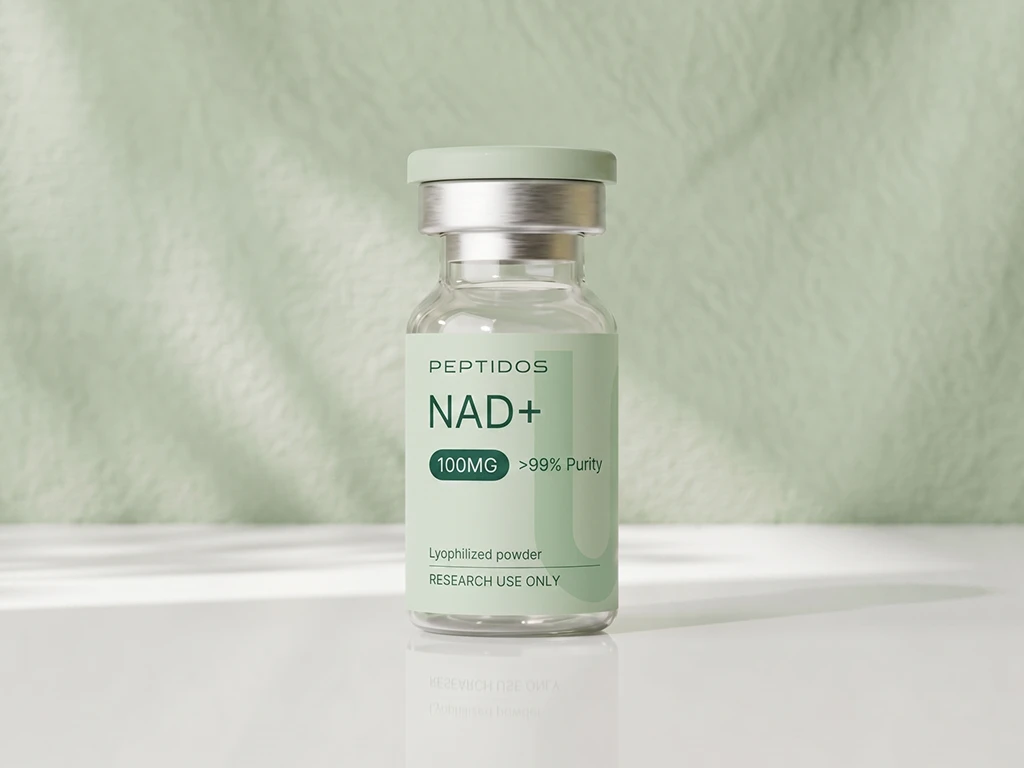
What Is NAD+?
NAD+ (Nicotinamide Adenine Dinucleotide) is a fundamental coenzyme present in every living cell, composed of two nucleotides joined through their phosphate groups. As a research compound, it has attracted substantial scientific interest for its central role in redox reactions, cellular energy production, and the regulation of longevity-associated enzymes such as sirtuins and PARPs.
Its underlying biological role relates to electron transfer during cellular respiration and the activation of enzymes that maintain genomic stability and metabolic homeostasis. Studies indicate that NAD+ levels decline progressively with age, and its restoration is associated with improved mitochondrial efficiency, enhanced DNA repair, and modulation of inflammatory pathways (Verdin, 2015).
Mechanism of Action
NAD+ is studied for its dual function as both a redox cofactor and a signaling substrate. Through interconversion with NADH, it shuttles electrons between metabolic pathways and supports ATP synthesis via oxidative phosphorylation (Cantó et al., 2015). It also serves as a co-substrate for sirtuins (SIRT1–SIRT7), poly(ADP-ribose) polymerases (PARPs), and CD38, regulating gene expression, DNA damage response, and intracellular calcium signaling.
Research Use Only
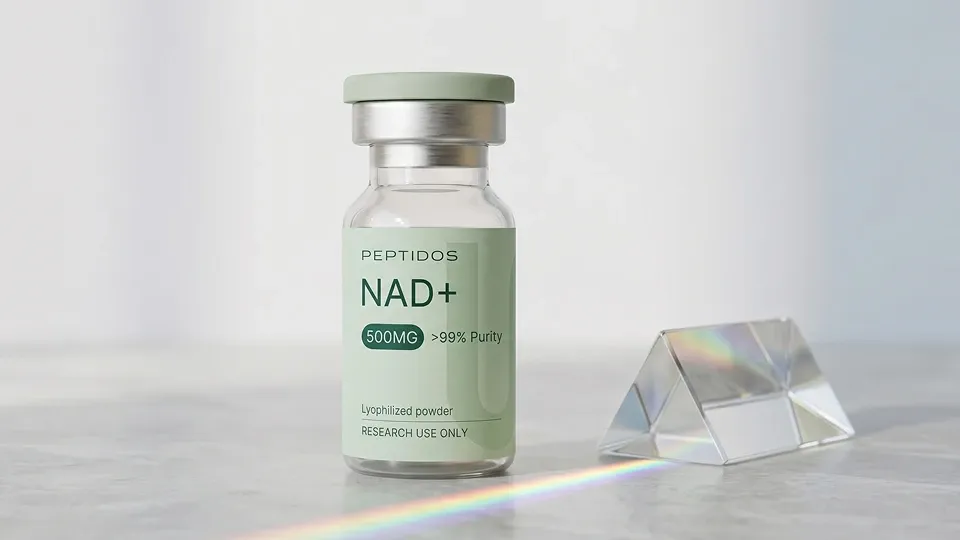
NAD+ supplied by Peptidos.eu is intended exclusively for laboratory and scientific research. It is not approved for human or animal consumption and must not be used as a medicine or diagnostic tool.
- Chemical name
- NAD+ (β-Nicotinamide Adenine Dinucleotide)
- Purity
- 99.532%
- Molecular formula
- C₂₁H₂₇N₇O₁₄P₂
- CAS number
- 53-84-9
- Molecular weight
- 663.43 g/mol
- Appearance
- White to off-white lyophilized powder.
- Solubility / reconstitution
- Highly water-soluble. Reconstitute in bacteriostatic or sterile water; dissolves readily to a clear, colorless to pale-yellow solution.
- Storage
- Stable for 24–36 months (lyophilized, -20°C, protected from light and moisture). After reconstitution store at 4°C and use within ~5–7 days; for longer storage aliquot and freeze at -20°C.
- Verdin, E. (2015). NAD+ in aging, metabolism, and neurodegeneration. Science, 350(6265), 1208–1213.
- Cantó, C., Menzies, K. J., & Auwerx, J. (2015). NAD+ metabolism and the control of energy homeostasis: a balancing act between mitochondria and the nucleus. Cell Metabolism, 22(1), 31–53.
- Mills, K. F., et al. (2016). Long-term administration of nicotinamide mononucleotide mitigates age-associated physiological decline in mice. Cell Metabolism, 24(6), 795–806.
- Fang, E. F., et al. (2016). NAD+ replenishment improves lifespan and healthspan in ataxia telangiectasia models via mitophagy and DNA repair. Cell Metabolism, 24(4), 566–581.
- Zhang, H., et al. (2016). NAD+ repletion improves mitochondrial and stem cell function and enhances life span in mice. Science, 352(6292), 1436–1443.
- Lautrup, S., et al. (2019). NAD+ in brain aging and neurodegenerative disorders. Cell Metabolism, 30(4), 630–655.
- Yoshino, J., et al. (2011). Nicotinamide mononucleotide, a key NAD+ intermediate, treats the pathophysiology of diet- and age-induced diabetes in mice. Cell Metabolism, 14(4), 528–536.
- Imai, S., & Guarente, L. (2014). NAD+ and sirtuins in aging and disease. Trends in Cell Biology, 24(8), 464–471.
- Bogan, K. L., & Brenner, C. (2008). Nicotinic acid, nicotinamide, and nicotinamide riboside: a molecular evaluation of NAD+ precursor vitamins in human nutrition. Annual Review of Nutrition, 28, 363–389.
- Rajman, L., Chwalek, K., & Sinclair, D. A. (2018). Therapeutic potential of NAD-boosting molecules: the in vivo evidence. Cell Metabolism, 27(3), 529–547.
Disclaimer
The products offered by peptidos.eu are intended exclusively for research and laboratory use and are sold only to qualified professionals, institutions, or authorized entities. These products are not intended for human or veterinary consumption, nor for any application involving living organisms, including — but not limited to — diagnostic, therapeutic, or recreational purposes.
By Making a Purchase, the Customer Declares that:
They are a qualified professional or entity, possessing the necessary competence, training, and facilities for the safe handling of chemical reagents;
They will use the product in full compliance with all applicable local, national, and European Union laws and regulations;
They will adopt appropriate safety measures during all stages of handling, storage, and disposal.
Prohibited Uses
The product must not be used as an Active Pharmaceutical Ingredient (API) in the manufacturing or preparation of medicines intended for humans or animals;
Any direct administration or use on humans or animals is strictly prohibited;
Peptidos.eu does not endorse or permit the use of its products for the production, testing, or development of illegal substances.
Liability
The purchaser assumes full responsibility for the handling, storage, and use of the product in safe conditions and in compliance with the law.
Peptidos.eu shall not be held liable for any direct or indirect damages arising from improper use, incorrect storage, or unauthorized use of the product.
Peptidos.eu reserves the right to refuse the sale to any individual or entity suspected of improper use of its products.
In case of doubts regarding the safe and lawful use of the product, it is recommended to consult a qualified professional experienced in laboratory research.
Regulatory Compliance
Peptidos.eu does not claim or imply that its products are approved by the European Medicines Agency (EMA), the Food and Drug Administration (FDA), or any other regulatory authority. All information provided is for informational and scientific purposes only. These products are not intended to diagnose, treat, cure, or prevent any disease.
Related products
The European Standard for Research Peptides
Born in Scandinavia. Built on the principle that research-grade means exactly that. Why researchers choose Peptidos:
- High purity
- Batch-to-batch consistency
- Most comprehensive testing available
- Professional support from people who understand