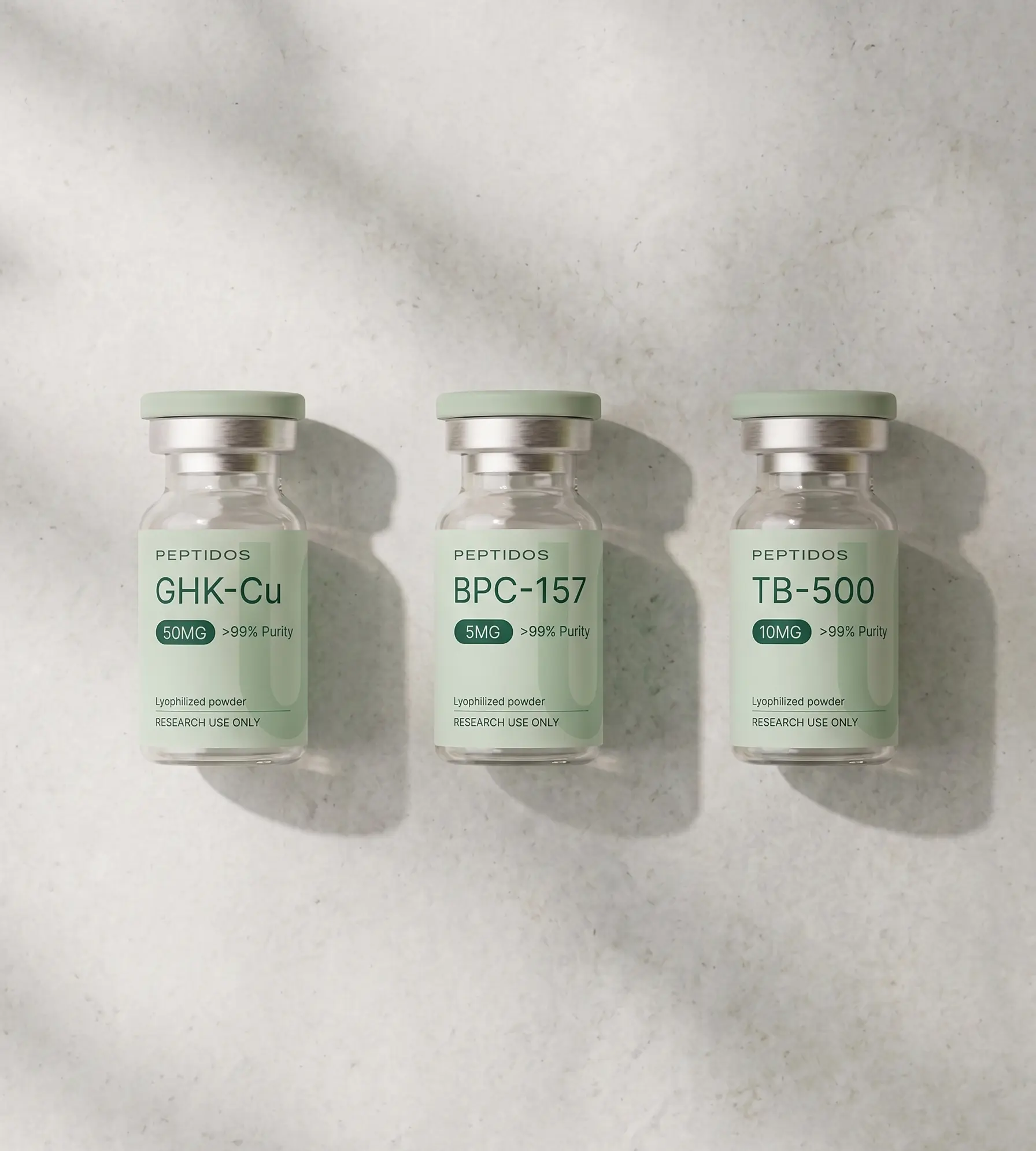
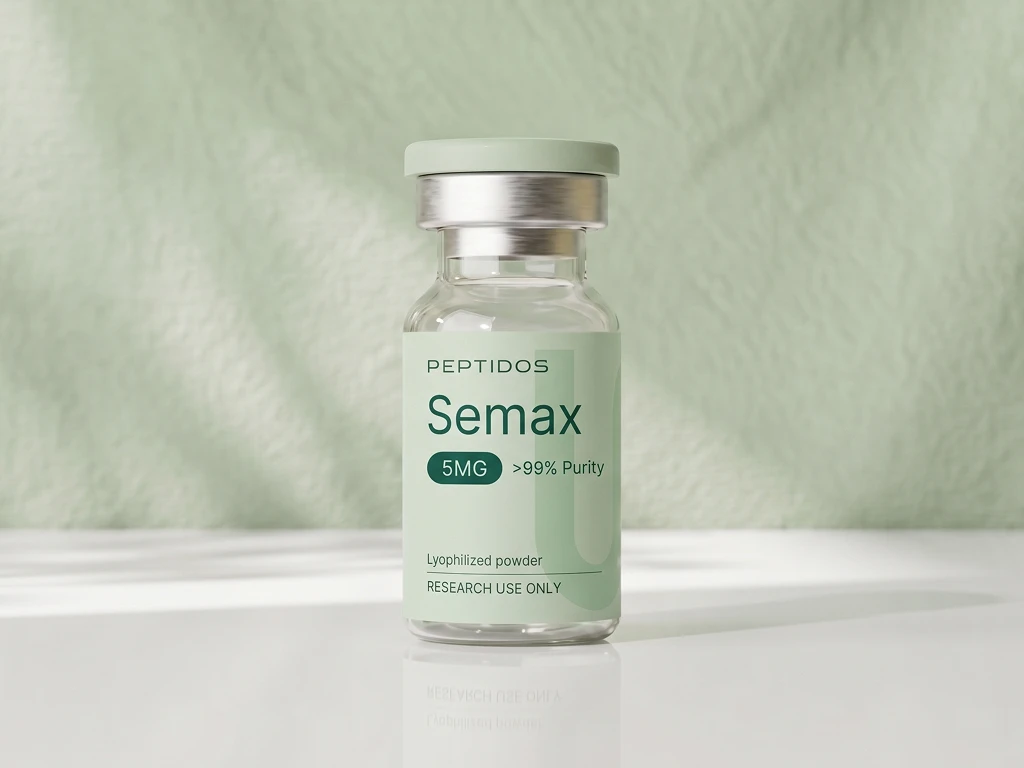
Semax
Peptide investigated in laboratory studies for its effects on neuronal signaling, neuroprotection, and brain-derived neurotrophic factor pathways.
Get an extra 35% off with code SUMMER35 at checkout
What Is Semax?
Semax is a synthetic peptide made up of seven amino acids. It was originally developed from a small fragment of adrenocorticotropic hormone (ACTH), with an added Pro-Gly-Pro tail that makes it more stable and longer-lasting in the body. Unlike the original hormone, Semax doesn't trigger hormonal effects. Instead, it focuses purely on supporting the brain and nervous system.
In research settings, Semax has gained attention for its nootropic and neuroprotective properties. Scientists have studied it for decades, particularly for how it influences memory, focus, mood, and the brain's ability to recover from stress or injury.
How It Works
Semax is believed to support the brain through several pathways at once. Studies suggest it boosts levels of brain-derived neurotrophic factor (BDNF) and nerve growth factor (NGF), two key proteins that help neurons grow, connect, and survive (Dolotov et al., 2006).
It also appears to influence dopamine and serotonin activity, which play a major role in mood, motivation, and cognitive performance. On top of that, research points to anti-inflammatory and antioxidant effects within the brain, helping protect neurons from damage caused by stress, poor circulation, or aging.
Research Use Only
Semax supplied by Peptidos.eu is intended exclusively for laboratory and scientific research. It is not approved for human or animal consumption and must not be used as a medicine or diagnostic tool.
- Chemical name
- Semax
- Purity
- 99.746%
- Molecular formula
- C₃₇H₅₁N₉O₁₀S
- Amino acid sequence
- Met-Glu-His-Phe-Pro-Gly-Pro
- CAS number
- 80714-61-0
- Molecular weight
- 813.93 g/mol
- Number of amino acids
- 7
- Appearance
- White to off-white lyophilized (freeze-dried) powder; hygroscopic.
- Solubility / reconstitution
- Highly water-soluble. Reconstitute in bacteriostatic water, sterile water, or 0.9% saline; dissolves readily to a clear, colorless solution.
- Storage
- Stable for ~24 months lyophilized at −20 °C, sealed and protected from light and moisture. After reconstitution, store at 2–8 °C and use within ~1–2 weeks. Avoid repeated freeze-thaw cycles.
CognitiveLongevityInjury Recovery9 min read
Semax: The "Brain Protection Peptide" - Research Summary 2026
A research-based look at one of the most studied nootropic peptides in neuroscience, including how it works, what the clinical data actually shows, and where the science is heading in 2026.
CognitiveSleep8 min read
Semax vs Selank for Cognition and Anxiety: What the Research Actually Says
In nootropic and biohacking circles, two names come up like a matched pair: Semax and Selank. Both are intranasal peptides sold as "research chemicals" in the West, since no major regulator has approved them.
- Dolotov, O. V., et al. (2006). Semax, an analog of ACTH(4-10) with cognitive effects, regulates BDNF and trkB expression in the rat hippocampus. Brain Research, 1117(1), 54–60.
- Medvedeva, E. V., et al. (2014). The peptide semax affects the expression of genes related to the immune and vascular systems in rat brain focal ischemia: genome-wide transcriptional analysis. BMC Genomics, 15, 228.
- Gusev, E. I., et al. (1997). Effectiveness of semax in acute period of hemispheric ischemic stroke (a clinical and electrophysiological study). Zhurnal Nevrologii i Psikhiatrii imeni S.S. Korsakova, 97(6), 26–34.
- Eremin, K. O., et al. (2005). Semax, an ACTH(4-10) analogue with nootropic properties, activates dopaminergic and serotoninergic brain systems in rodents. Neurochemical Research, 30(12), 1493–1500.
- Filippenkov, I. B., et al. (2020). Novel insights into the protective properties of ACTH(4-7)PGP (Semax) peptide at the transcriptome level following cerebral ischaemia–reperfusion in rats. Genes, 11(6), 681.
- Shadrina, M. I., et al. (2001). Rapid induction of neurotrophin mRNAs in rat glial cell cultures by Semax, an adrenocorticotropic hormone analog. Neuroscience Letters, 308(2), 115–118.
- Storozhevykh, T. P., et al. (2007). Effects of semax and its Pro-Gly-Pro fragment on calcium homeostasis of neurons and their survival under conditions of glutamate toxicity. Bulletin of Experimental Biology and Medicine, 143(5), 601–604.
- Romanova, G. A., et al. (2006). Neuroprotective and antiamnesic effects of Semax during experimental ischemic infarction of the cerebral cortex. Bulletin of Experimental Biology and Medicine, 142(6), 663–666.
- Kaplan, A. Y., et al. (1996). Synthetic ACTH analogue Semax displays nootropic-like activity in humans. Neuroscience Research Communications, 19(2), 115–123.
- Stavchansky, V. V., et al. (2011). The effect of Semax and its C-terminal fragment Pro-Gly-Pro on the expression of VEGF family genes and their receptors in experimental focal ischemia of the rat brain. Journal of Molecular Neuroscience, 45(2), 177–185.
Disclaimer
The products offered by peptidos.eu are intended exclusively for research and laboratory use and are sold only to qualified professionals, institutions, or authorized entities. These products are not intended for human or veterinary consumption, nor for any application involving living organisms, including — but not limited to — diagnostic, therapeutic, or recreational purposes.
By Making a Purchase, the Customer Declares that:
They are a qualified professional or entity, possessing the necessary competence, training, and facilities for the safe handling of chemical reagents;
They will use the product in full compliance with all applicable local, national, and European Union laws and regulations;
They will adopt appropriate safety measures during all stages of handling, storage, and disposal.
Prohibited Uses
The product must not be used as an Active Pharmaceutical Ingredient (API) in the manufacturing or preparation of medicines intended for humans or animals;
Any direct administration or use on humans or animals is strictly prohibited;
Peptidos.eu does not endorse or permit the use of its products for the production, testing, or development of illegal substances.
Liability
The purchaser assumes full responsibility for the handling, storage, and use of the product in safe conditions and in compliance with the law.
Peptidos.eu shall not be held liable for any direct or indirect damages arising from improper use, incorrect storage, or unauthorized use of the product.
Peptidos.eu reserves the right to refuse the sale to any individual or entity suspected of improper use of its products.
In case of doubts regarding the safe and lawful use of the product, it is recommended to consult a qualified professional experienced in laboratory research.
Regulatory Compliance
Peptidos.eu does not claim or imply that its products are approved by the European Medicines Agency (EMA), the Food and Drug Administration (FDA), or any other regulatory authority. All information provided is for informational and scientific purposes only. These products are not intended to diagnose, treat, cure, or prevent any disease.
Related products
The European Standard for Research Peptides
Born in Scandinavia. Built on the principle that research-grade means exactly that. Why researchers choose Peptidos:
- High purity
- Batch-to-batch consistency
- Most comprehensive testing available
- Professional support from people who understand