BPC-157 vs TB-500 for Recovery: What the Research Actually Says
If you've spent any time in fitness, biohacking, or sports medicine circles lately, you've probably run into two names being thrown around like cures for every nagging injury: BPC-157 and TB-500.
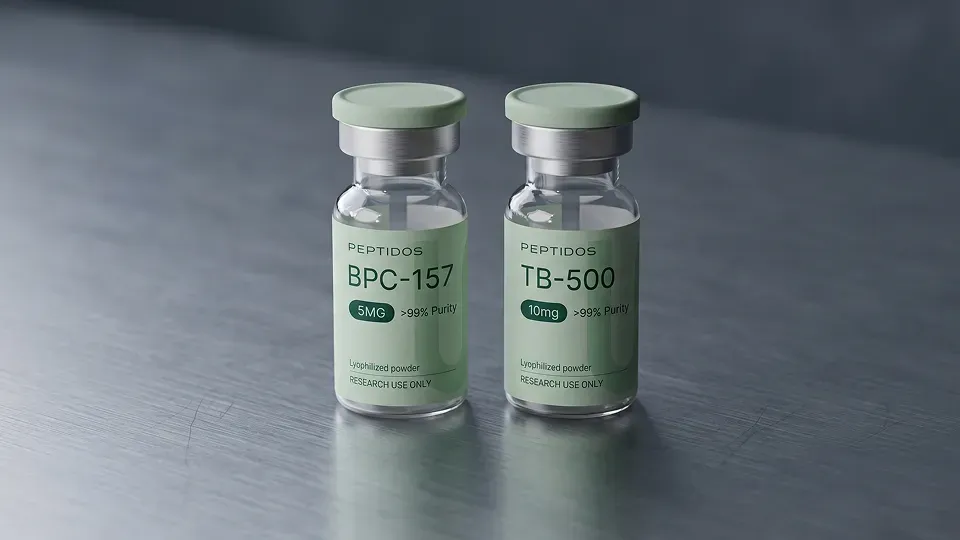
The hype is loud. The actual evidence is more nuanced. Here's a look at what the research suggests about both peptides — and where the science still has significant gaps.
What Is BPC-157?
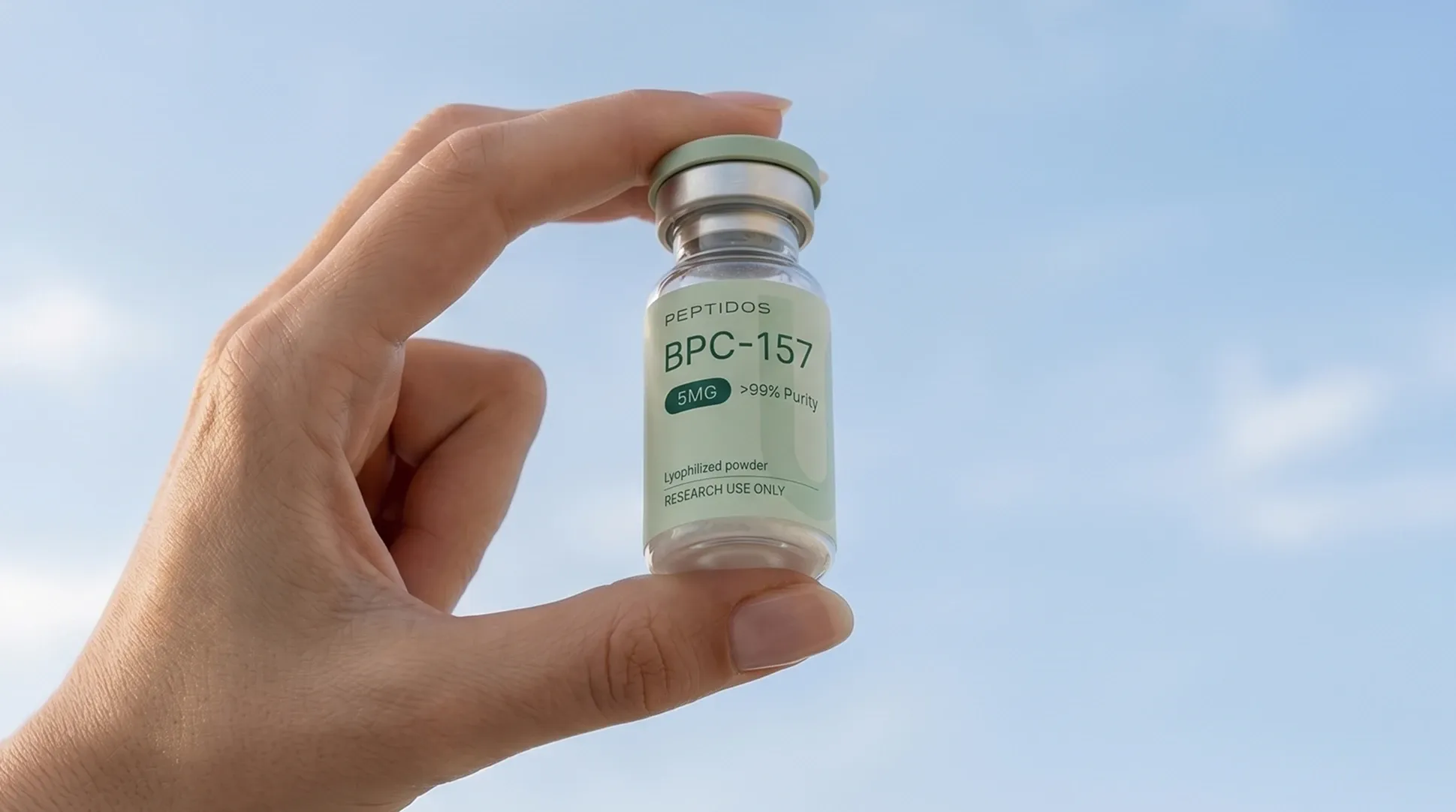
BPC-157 stands for Body Protection Compound-157 — a synthetic 15-amino-acid peptide derived from a protective protein found in human stomach acid. Croatian researchers first isolated it in the early 1990s, and it's been the subject of a steady drip of preclinical research ever since.
In animal studies, BPC-157 has been described as a kind of localized signaling molecule. Research suggests that when applied near injured tissue, it appears to influence several repair processes at once: stimulating the formation of new blood vessels (angiogenesis), modulating inflammatory pathways, and supporting collagen production. The peptide has been studied in connection with tendon and ligament injuries, gastrointestinal conditions like ulcers and inflammatory bowel disease, joint problems, and post-surgical healing.
One frequently cited finding from a 2018 study by Chang et al. is that BPC-157 appears to upregulate growth hormone receptor expression in tendon fibroblasts, which could theoretically make tendon cells more responsive to circulating growth hormone. It's a mechanism that's been used to explain its tissue-healing potential, though most of this work has been done in rats rather than humans.
What Is TB-500?
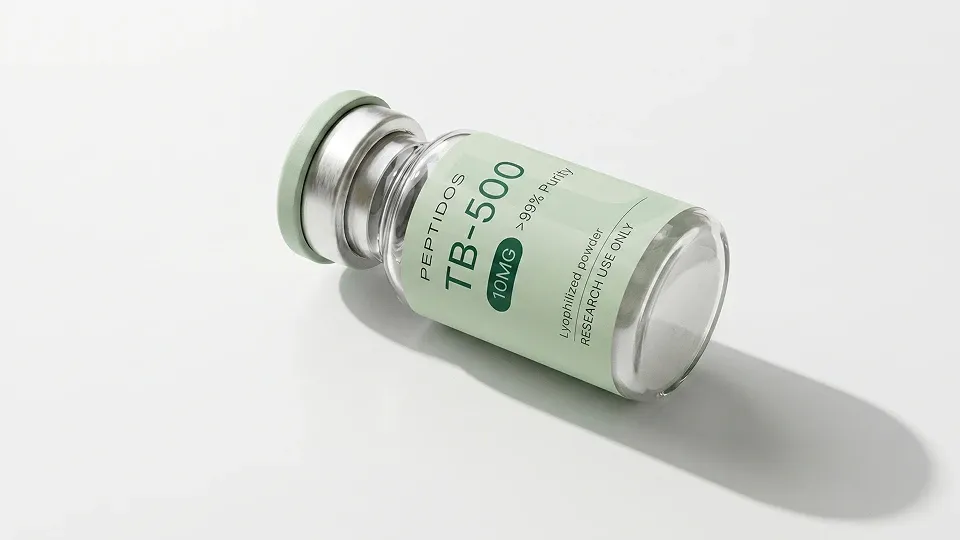
TB-500 is a synthetic version of a small fragment of Thymosin Beta-4 (Tβ4), a protein found naturally in nearly all human and animal cells. Native Tβ4 has 43 amino acids; TB-500 is a much shorter chunk (around 7 amino acids), engineered for better stability and bioavailability.
Where BPC-157 has been studied largely as a localized agent, TB-500 has been characterized in research as a more systemic one. The proposed mechanism centers on actin regulation — actin being the protein that controls how cells move and reshape themselves. Research suggests TB-500 may play a role in mobilizing repair cells toward sites of tissue damage, supporting cell migration, and modulating inflammation across multiple tissue types.
Preclinical research has explored its effects on muscle and connective tissue repair, cardiovascular healing, skin and corneal wound healing, and inflammation. It's worth noting that TB-500 has been used extensively in veterinary medicine, particularly in racehorses, and much of the practical knowledge around it comes from that context rather than human clinical trials.
BPC-157 vs TB-500: The Key Differences
Both peptides are being investigated for their roles in tissue healing, but the research suggests they work through different mechanisms.
| Feature | BPC-157 | TB-500 |
|---|---|---|
| Proposed action | Localized - most studied at injection site | Systemic - distributes through the body |
| Areas of research focus | Tendons, ligaments, gut, specific tissues | Muscle repair, full-body healing, flexibility |
| Main mechanism studied | Angiogenesis, collagen synthesis | Actin regulation, cell migration |
| Origin | Synthetic; derived from gastric protein | Synthetic; fragment of Thymosin Beta-4 |
| Veterinary background | Limited | Extensive (especially equine) |
| Human clinical evidence | Very limited; one unpublished Phase I trial | Very limited; mostly preclinical |
A common shorthand in the peptide research community is that BPC-157 looks more like a precision tool while TB-500 looks more like a broad-spectrum signal — though both descriptions remain hypotheses derived largely from animal models.
Which One Is "Better"?
This is the question everyone wants answered, and the honest research-based answer is: it depends on what's being studied, and there isn't enough human data to say definitively.
Preclinical research on BPC-157 has been more concentrated on tendon, ligament, and gastrointestinal repair, while TB-500 research has leaned more toward systemic muscle recovery, cardiovascular healing, and broader anti-inflammatory effects. In animal models, BPC-157 has shown faster apparent onset in localized injuries; TB-500 has shown effects that take longer to manifest but distribute more widely.
What the literature consistently emphasizes — including recent narrative reviews like Majerović et al. (2025) — is that nearly all positive findings come from preclinical studies, and well-designed human clinical trials are still essentially missing. Reviewers have flagged probable publication bias, since virtually all published studies report positive effects.
The "Wolverine Stack": BPC-157 + TB-500
Anecdotally, many users in the peptide community combine both compounds in what's been nicknamed the Wolverine Stack (after the Marvel character known for rapid healing). The theoretical rationale is mechanism-based: BPC-157's localized angiogenic and collagen-related effects could complement TB-500's broader cell-migration and actin-regulating effects.
Some clinicians and practitioners report that the combination appears to support healing more effectively than either peptide alone, but no human clinical trials have evaluated the stack.
Safety and Side-effects
Animal studies of both peptides have generally reported favorable safety profiles, with minimal acute side effects. The most commonly noted issues in the literature and in user reports include mild injection-site reactions, occasional headaches, transient fatigue, and rare nausea or lightheadedness.
The bigger problem is what's missing. Long-term human safety data essentially doesn't exist for either compound. A Phase I human trial for BPC-157 was completed in 2015, but the results were never published — a fact that recent reviews (Lee & Burgess, 2025; Sikirić et al., 2025) have flagged as a notable gap in the evidence base.
Legal and Regulatory Status in Europe
Neither BPC-157 nor TB-500 has been approved by the European Medicines Agency (EMA) for human use, and neither carries marketing authorisation in any EU member state. The same is true in the UK, where the Medicines and Healthcare products Regulatory Agency (MHRA) has not licensed either compound.
Where they exist legally is in a narrow research category. Under EU regulations, peptides like BPC-157 and TB-500 can be sold to qualified buyers — laboratories, universities, and research facilities — provided they are clearly labelled as research chemicals and not marketed for human consumption. Personal possession isn't typically criminalised in most EU jurisdictions, but personal use sits firmly outside what regulators would recommend.
For competitive athletes, the situation is more clear-cut. The World Anti-Doping Agency (WADA) banned BPC-157 in 2022 under category S0 (non-approved substances), and TB-500 falls under the same prohibition.
The regulatory picture has been relatively static, but it's worth keeping an eye on. As preclinical research keeps accumulating and human pilot studies slowly emerge, the EMA's position could in theory shift — though there's no formal review currently underway.
What the Research Suggests About Use Cases
Looking at the literature, certain patterns emerge in how each peptide has been studied:
- BPC-157 research has focused most heavily on localized tendon, ligament, and gastrointestinal applications. It's also the only one of the two with any evidence — limited as it is — for oral administration, primarily in gut-related contexts.
- TB-500 research has been more concentrated on systemic applications, including muscle repair, cardiovascular healing, and broader inflammatory processes. Most of the practical experience comes from veterinary medicine.
- The combination has been explored anecdotally and in some clinical practice settings but lacks rigorous human clinical research.
None of this should be read as guidance on what to use. It's simply where the existing research has been pointed.
BPC-157 and TB-500 Verdict
BPC-157 and TB-500 are two of the most promising peptides currently being researched for tissue repair and recovery, but they're also two of the most over-hyped relative to the actual evidence base. The animal research is genuinely interesting. Human research is genuinely thin. The anecdotal results circulating online are encouraging and the potential is real, but rigorous human data is still missing.
References
- Majerović, F. et al. (2025). "Regeneration or Risk? A Narrative Review of BPC-157 for Musculoskeletal Healing." Sports Medicine – Open, PMC12446177.
- Duerr, R.A. et al. (2025). "Emerging Use of BPC-157 in Orthopaedic Sports Medicine: A Systematic Review." Orthopaedic Journal of Sports Medicine, PMC12313605.
- Chang, C-H. et al. (2018). "Pentadecapeptide BPC 157 Enhances the Growth Hormone Receptor Expression in Tendon Fibroblasts." Journal of Orthopaedic Research, PMC6271067.
- Jóźwiak, M. et al. (2025). "Multifunctionality and Possible Medical Application of the BPC 157 Peptide — Literature and Patent Review." Pharmaceuticals, 18(2), 185.
- Sikirić, P. et al. (2025). "Stable Gastric Pentadecapeptide BPC 157 as a Therapy and Safety Key." Pharmaceuticals, 18(6), 928.
- Sikirić, P. et al. (2023). "Stable Gastric Pentadecapeptide BPC 157 May Recover Brain–Gut Axis and Gut–Brain Axis Function." Pharmaceuticals, PMC10224484.
- Sikirić, P. et al. (2016). "Brain-gut Axis and Pentadecapeptide BPC 157: Theoretical and Practical Implications." Current Neuropharmacology, 14, 857–865.
- Lee, E. & Burgess, K. (2025). "Safety of Intravenous Infusion of BPC157 in Humans: A Pilot Study." Alternative Therapies in Health and Medicine.
- Lee, E. et al. (2024). "Effect of BPC-157 on Symptoms in Patients with Interstitial Cystitis: A Pilot Study." Alternative Therapies in Health and Medicine, 30, 12–17.
- Sikirić, P. et al. (2020). "Stable Gastric Pentadecapeptide BPC 157, Robert's Stomach Cytoprotection/Adaptive Cytoprotection/Organoprotection, and Selye's Stress Coping Response." Gut and Liver, 14(2), 153–167.
Author

Peptidos
Research Team
We are a Scandinavian longevity research team with 15+ years of combined experience studying peptides' role in aging, cellular health, muscle growth, and cognitive performance.
Sign up to our newsletter