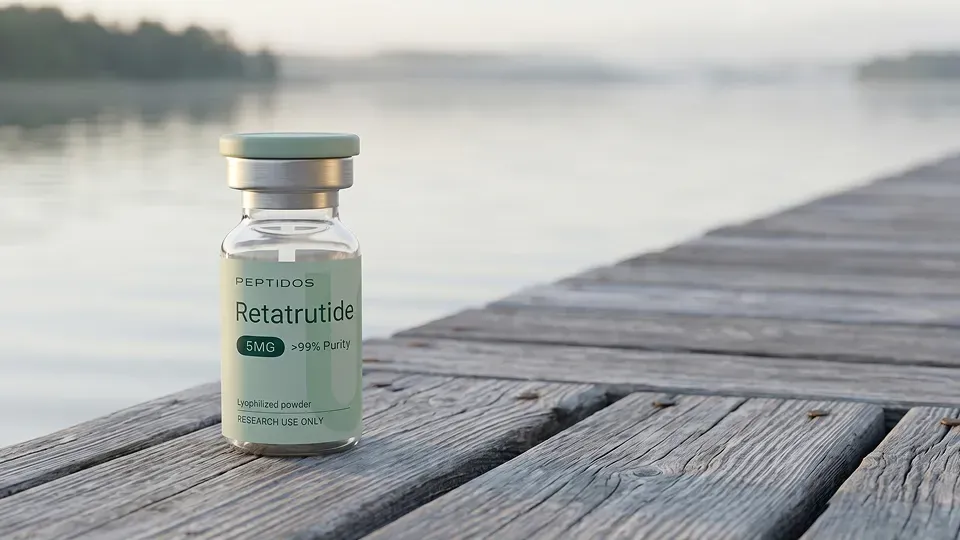
Should You Buy One Big Peptide Vial or Two Smaller Ones?
One vial looks cheaper on paper. Here's why two smaller ones almost always deliver more usable peptide.
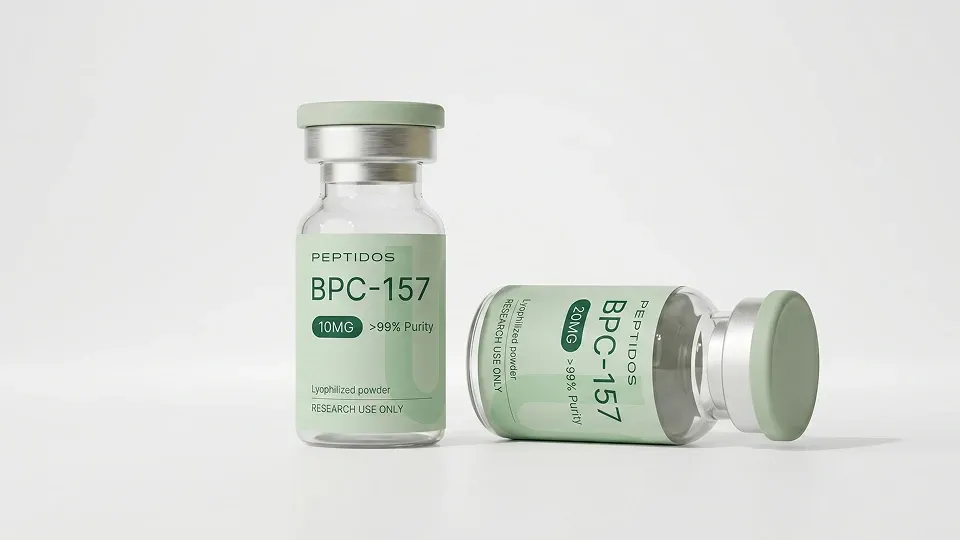
When sourcing research peptides, the temptation is obvious: one larger vial often looks like the better deal. Fewer rubber stoppers, less packaging, simpler inventory. But once you understand what happens to a peptide after reconstitution, the math flips. For nearly every research workflow, two 10mg vials outperform a single 20mg vial — in stability, sterility, and usable potency over time.
Here's the science behind why splitting your supply is the smarter buy.
The Hidden Clock: Peptides Degrade Faster Once Reconstituted
A lyophilized (freeze-dried) peptide is remarkably stable. Stored properly at –20°C, most lyophilized peptides remain intact for a year or more, and at –80°C they can stay viable for several years [1][2].
Reconstitution changes everything.
Once you add bacteriostatic water, the peptide enters a fundamentally less stable environment. Water reintroduces the conditions that drive every major degradation pathway: hydrolysis of peptide bonds, oxidation of methionine, cysteine, and tryptophan residues, deamidation of asparagine and glutamine, and aggregation of hydrophobic sequences [2][3]. Reconstituted peptide solutions are typically only stable for a few days to a few weeks in the refrigerator, and even at –20°C the usable window is measured in weeks to months — not years [1][4].
In other words: the moment you open a 20mg vial and add water, you've started a countdown on the entire 20mg.
Why a 20mg Vial Is a Liability You Don't Need
Imagine you only need 10mg over the next month. With a single 20mg vial, your options are all bad:
- Reconstitute the whole 20mg. You now have twice the peptide you need sitting in solution, ticking down. Every dose pulled is another needle puncture, another freeze-thaw if you're aliquoting, another oxidation opportunity from headspace air.
- Reconstitute and freeze the rest. Aliquoting helps, but you've still committed the entire 20mg to solution-phase storage, which is intrinsically less stable than lyophilized powder [3].
- Try to split the dry powder. Dividing a lyophilized vial introduces moisture from the air (peptides are hygroscopic), risks contamination, and is wildly inaccurate without analytical-grade equipment [3].
With two 10mg vials, none of those tradeoffs exist. You reconstitute one, use it within its stable window, and the second vial stays sealed in its dry, oxygen-poor, freezer-stable state until you actually need it. The clock on the second vial doesn't start until you start it.
The Bacteriostatic Water Constraint Most People Forget
There's a second timer most buyers overlook: bacteriostatic water itself expires 28 days after first puncture.
Bacteriostatic water contains 0.9% benzyl alcohol, which inhibits microbial growth — but the preservative loses potency with repeated needle entries and exposure to air. USP guidelines and manufacturer labels specify that opened bac water should be discarded within 28 days [5][6].
Most peptide reconstitutions use 1–3 mL of bac water per vial. If you reconstitute a 20mg vial at, say, 2 mg/mL, you've used 10 mL of water that now needs to be consumed within 28 days — or the peptide solution outlives the preservative window of its diluent. Two smaller vials, reconstituted on a staggered schedule, align much better with the 28-day bac water reality.
Three Reasons Splitting Wins
- You only "start the clock" when you need to. A sealed 10mg lyophilized vial in your freezer is essentially frozen in time. A reconstituted 20mg vial is degrading every day, whether you use it or not. Buying in smaller units lets you keep peptide in its most stable form for as long as possible.
- Contamination stays contained. Each needle puncture carries a small contamination risk. If something goes wrong with one 10mg vial — a compromised stopper, accidental warming, visible cloudiness — you've lost half your supply, not all of it [7].
- Better dose-matching with less waste. If your protocol changes, your dose changes, or your project ends early, two smaller vials give you exit options. A single large vial is an all-or-nothing commitment.
What About the Cost Difference?
Yes, two 10mg vials usually cost slightly more than one 20mg. But the relevant comparison isn't sticker price — it's cost per milligram of bioactive peptide actually delivered into your experiment.
If degradation reduces effective potency in a poorly-stored 20mg vial by even 15–25% over its use period (entirely realistic for peptides containing Met, Cys, or Trp residues sitting in solution for weeks [2][3]), the "cheaper" larger vial is actually delivering fewer usable milligrams. The small premium for two vials is insurance on the entire batch.
Frequently Asked Questions
How long does a reconstituted peptide really last?
It depends on sequence and storage temperature, but the general rule is: a few days to a few weeks at 2–8°C, and weeks to a few months at –20°C with proper aliquoting [1][4]. Lyophilized form at –20°C or –80°C lasts dramatically longer — months to years [1][2].
Can I just reconstitute a 20mg vial and aliquot it?
You can, and it's better than nothing — but you're still solution-phase storing the full 20mg. Lyophilized storage in two separate 10mg vials is more stable than aliquoted solution storage of one 20mg vial [3].
Does this matter for stable peptides like BPC-157 or TB-500?
Even relatively stable sequences degrade in solution faster than as lyophilized powder. The principle applies across the board, with sensitivity scaling up for peptides containing oxidation-prone (Met, Cys, Trp) or hydrolysis-prone (Asp, Asn) residues [2][3].
What about the 28-day bacteriostatic water rule? It applies regardless of vial size — but smaller vials let you align your reconstitution schedule with that 28-day window instead of fighting it [5][6].
The Bottom Line
Of course, it depends on what you actually need. If your protocol genuinely requires the full 20mg within a short, defined window — say, a few weeks of consistent use where the entire vial will be consumed before degradation becomes a meaningful factor — then a single larger vial can make sense, and you'll save a bit on the per-mg price. The math only works in that scenario, though, and only if your reconstitution and storage protocol is tight.
For everyone else, smaller is almost always better. Two 10mg vials let you keep half your supply in its most stable form (dry, sealed, frozen) while you work through the other half. You sidestep the bacteriostatic water expiration mismatch, you contain contamination risk, and you protect yourself against the slow, invisible potency loss that affects every reconstituted peptide solution.
The slight price premium on two vials versus one is the cheapest insurance policy in your protocol. If you're not certain you'll consume the full amount quickly, buy in smaller increments — and only start the clock when you have to.
References
- Manning, M. C., Chou, D. K., Murphy, B. M., Payne, R. W., & Katayama, D. S. (2010). Stability of protein pharmaceuticals: an update. Pharmaceutical Research, 27(4), 544–575.
- Cleland, J. L., Powell, M. F., & Shire, S. J. (1993). The development of stable protein formulations: a close look at protein aggregation, deamidation, and oxidation. Critical Reviews in Therapeutic Drug Carrier Systems, 10(4), 307–377.
- Frokjaer, S., & Otzen, D. E. (2005). Protein drug stability: a formulation challenge. Nature Reviews Drug Discovery, 4(4), 298–306.
- Wang, W. (1999). Instability, stabilization, and formulation of liquid protein pharmaceuticals. International Journal of Pharmaceutics, 185(2), 129–188.
- Roberts, C. J. (2014). Therapeutic protein aggregation: mechanisms, design, and control. Trends in Biotechnology, 32(7), 372–380.
- United States Pharmacopeia. (2023). USP <797> Pharmaceutical Compounding—Sterile Preparations. United States Pharmacopeial Convention.
- Centers for Disease Control and Prevention. (2024). Questions about Multi-dose vials. CDC Injection Safety Guidelines.
Author

Peptidos
Research Team
We are a Scandinavian longevity research team with 15+ years of combined experience studying peptides' role in aging, cellular health, muscle growth, and cognitive performance.
Sign up to our newsletter
Related articles
BPC-157: The "Body Protection Compound" - Research Summary 2026
GHK-Cu Peptide Research: Benefits, Effects, and Risks Explained