BPC-157: The "Body Protection Compound" - Research Summary 2026
A research-based look at one of the most talked-about peptides in health and recovery, including its potential benefits, risks, and what science still doesn't know in 2026.
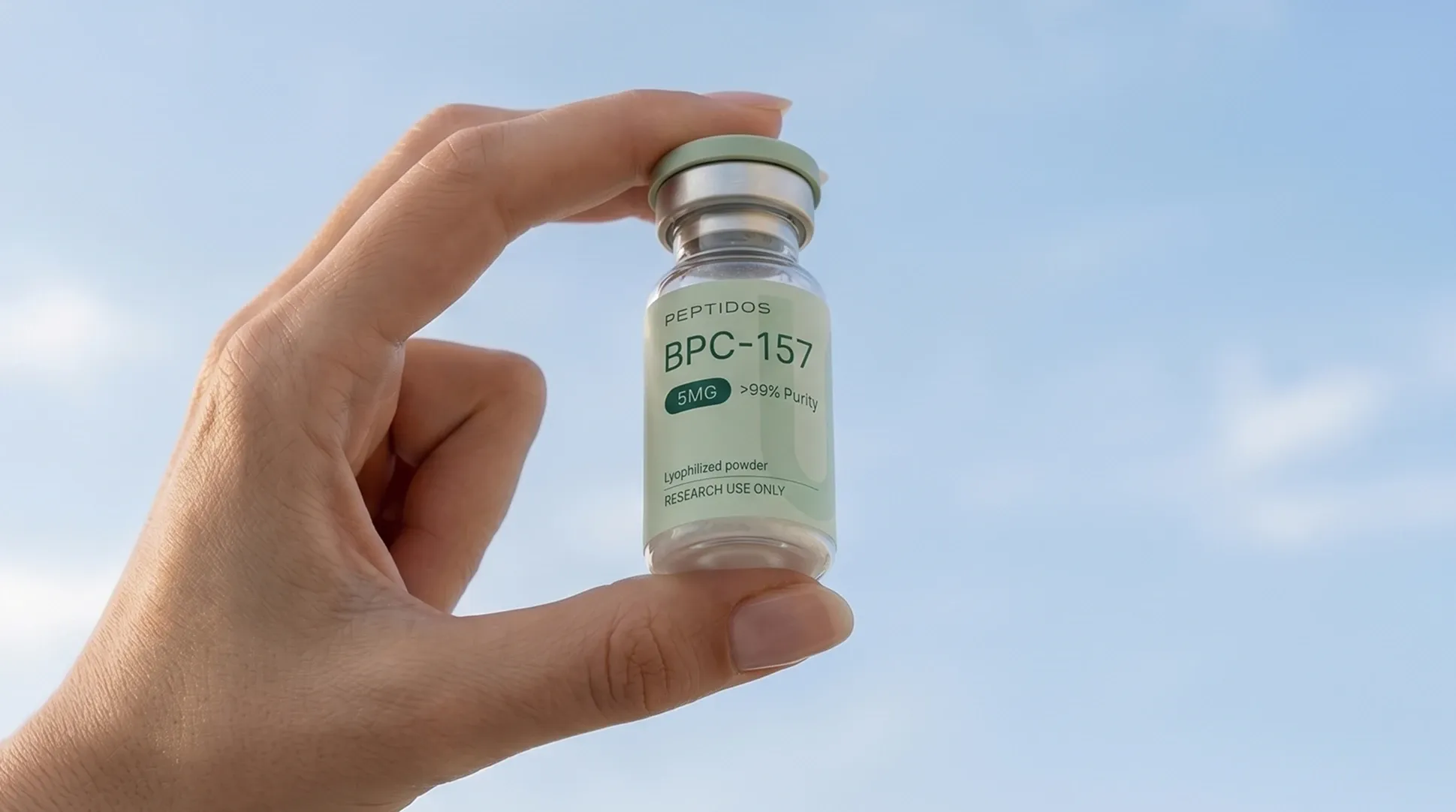
Few peptides have captured the attention of the research community quite like BPC-157. Originally isolated from a protective protein in human gastric juice, this compound has generated decades of preclinical data and a rapidly growing body of scientific literature. In this article, the Peptidos Research Team breaks down what the science actually tells us and where the gaps remain.
What Is BPC-157?
BPC-157 stands for Body Protection Compound-157. It's a synthetic peptide made up of 15 amino acids, originally derived from a protein found naturally in human gastric (stomach) juice. Researchers first described it in the scientific literature back in 1993, and it has been studied in animal models ever since.
The "body protection" part of its name reflects the peptide's origins in the stomach lining, where it appears to play a role in maintaining and repairing tissue. The synthetic version was designed to be more stable and usable for research purposes, and it's remarkably resistant to enzymatic breakdown, meaning it doesn't degrade quickly even in harsh digestive conditions.
What Has the BPC-157 Research Found?
The preclinical research on BPC-157 — meaning studies conducted in labs and on animals — is genuinely extensive. Dozens of studies over three decades have explored its effects across multiple organ systems.
Tissue Repair and Injury Recovery
This is the area that generates the most excitement. In animal models, BPC-157 has accelerated healing in tendons, ligaments, muscles, bones, and skin. A 2024 systematic review of 36 studies found the peptide consistently promoted healing by boosting growth factors and reducing inflammation across musculoskeletal injuries.
One particularly striking study involved rat Achilles tendon injuries, where treated animals showed not only faster healing but stronger tissue at the repair site, with increased load-bearing capacity over 14 days.
The peptide appears to act through multiple pathways simultaneously. It stimulates new blood vessel formation via VEGFR2 signaling, encourages fibroblast activity, upregulates growth hormone receptor expression, and activates FAK-paxillin pathways that help cells migrate into damaged areas.
In plain language: BPC-157 seems to create a better environment for your body to heal faster and more effectively.
Gut Health and Gastrointestinal Protection
Given that BPC-157 originates from gastric juice, it's fitting that some of the strongest preclinical evidence involves the digestive system. Animal studies have shown protective effects against gastric ulcers, NSAID-induced gut damage, inflammatory bowel disease models, and surgical anastomosis healing.
A 2025 review presented at the American College of Gastroenterology confirmed that BPC-157 improved both functional and structural outcomes across these conditions. It appears to strengthen the mucosal barrier while calming inflammatory signaling.
Notably, it can be administered orally and still retain biological activity, which is unusual for a peptide and makes it especially suited for gastrointestinal applications.
Anti-Inflammatory Effects
BPC-157 has consistently reduced inflammatory cytokines and oxidative stress markers across various tissue types in animal research. This complements its healing properties because by calming excess inflammation, it may allow the repair process to proceed more efficiently.
Neuroprotective Potential
Emerging animal research suggests BPC-157 may benefit brain health. In traumatic brain injury models, it reduced hemorrhage, swelling, and oxidative damage while improving neurological recovery. The peptide also appears to modulate serotonin and dopamine pathways, showing anti-anxiety and antidepressant-like effects in animal behavioral studies.
Researchers believe this connects to the broader concept of the brain-gut axis - the idea that gut health and brain function are deeply intertwined.
The Human Evidence: Promising but Limited
Despite decades of animal research, fewer than 30 people have been studied in published human trials as of early 2026. Only three pilot studies have been published:
- Chronic knee pain (2021): In a small case series, 7 out of 12 patients with chronic knee pain reported relief lasting more than six months after a single intra-articular BPC-157 injection.
- Interstitial cystitis (2024): Twelve women with severe bladder pain syndrome received BPC-157 bladder wall injections. The majority reported meaningful symptom improvement.
- IV safety study (2025): Two healthy adults received intravenous BPC-157 at doses up to 20 mg. No adverse effects were observed on cardiac, liver, kidney, thyroid, or metabolic markers. The peptide cleared from plasma within 24 hours.
These results are encouraging but not conclusive due to the small sample sizes.
Regulatory Status
Neither the EMA nor the FDA has approved BPC-157 as a medicine, simply because the large-scale clinical trials haven't been done.
That said, it's not a controlled substance in most of Europe, so it can legally be bought and possessed for research purposes in many EU countries. It just cannot be sold as a supplement or medicine. Australia treats it as prescription-only.
The World Anti-Doping Agency (WADA) stopped allowing athletes to use BPC-157 in 2022, largely because its tissue-repair and growth-factor activity could give users an unfair recovery and performance advantage.
Key takeaway on BPC-157 so far
BPC-157 is one of the most promising peptides in modern research. Three decades of preclinical data consistently point to remarkable healing, protective, and anti-inflammatory properties across multiple body systems. While large-scale human trials are still needed, the early clinical results are encouraging, and the safety profile looks favorable so far. As research advances, BPC-157 may well prove to be a breakthrough in how we approach tissue repair and recovery.
Bronnen
- Majerović, F. et al. (2025). "Regeneration or Risk? A Narrative Review of BPC-157 for Musculoskeletal Healing." Sports Medicine – Open, PMC12446177.
- Duerr, R.A. et al. (2025). "Emerging Use of BPC-157 in Orthopaedic Sports Medicine: A Systematic Review." Orthopaedic Journal of Sports Medicine, PMC12313605.
- Chang, C-H. et al. (2018). "Pentadecapeptide BPC 157 Enhances the Growth Hormone Receptor Expression in Tendon Fibroblasts." Journal of Orthopaedic Research, PMC6271067.
- Jóźwiak, M. et al. (2025). "Multifunctionality and Possible Medical Application of the BPC 157 Peptide — Literature and Patent Review." Pharmaceuticals, 18(2), 185.
- Sikirić, P. et al. (2025). "Stable Gastric Pentadecapeptide BPC 157 as a Therapy and Safety Key." Pharmaceuticals, 18(6), 928.
- Sikirić, P. et al. (2023). "Stable Gastric Pentadecapeptide BPC 157 May Recover Brain–Gut Axis and Gut–Brain Axis Function." Pharmaceuticals, PMC10224484.
- Sikirić, P. et al. (2016). "Brain-gut Axis and Pentadecapeptide BPC 157: Theoretical and Practical Implications." Current Neuropharmacology, 14, 857–865.
- Lee, E. & Burgess, K. (2025). "Safety of Intravenous Infusion of BPC157 in Humans: A Pilot Study." Alternative Therapies in Health and Medicine.
- Lee, E. et al. (2024). "Effect of BPC-157 on Symptoms in Patients with Interstitial Cystitis: A Pilot Study." Alternative Therapies in Health and Medicine, 30, 12–17.
- Sikirić, P. et al. (2020). "Stable Gastric Pentadecapeptide BPC 157, Robert's Stomach Cytoprotection/Adaptive Cytoprotection/Organoprotection, and Selye's Stress Coping Response." Gut and Liver, 14(2), 153–167.
Auteur

Peptidos
Onderzoeksteam
Wij zijn een Scandinavisch onderzoeksteam op het gebied van longevity, met meer dan 15 jaar aan gecombineerde ervaring in het bestuderen van de rol van peptiden bij veroudering, cellulaire gezondheid, spiergroei en cognitieve prestaties.
Meld je aan voor onze nieuwsbrief
Gerelateerde artikelen
TB-500: The "Repair Peptide" - Research Summary 2026
BPC-157 vs TB-500 for Recovery: What the Research Actually Says