TB-500: The "Repair Peptide" - Research Summary 2026
An evidence-based exploration of one of the most researched regenerative peptides in science - examining its potential benefits, risks, and what the current data actually shows in 2026.
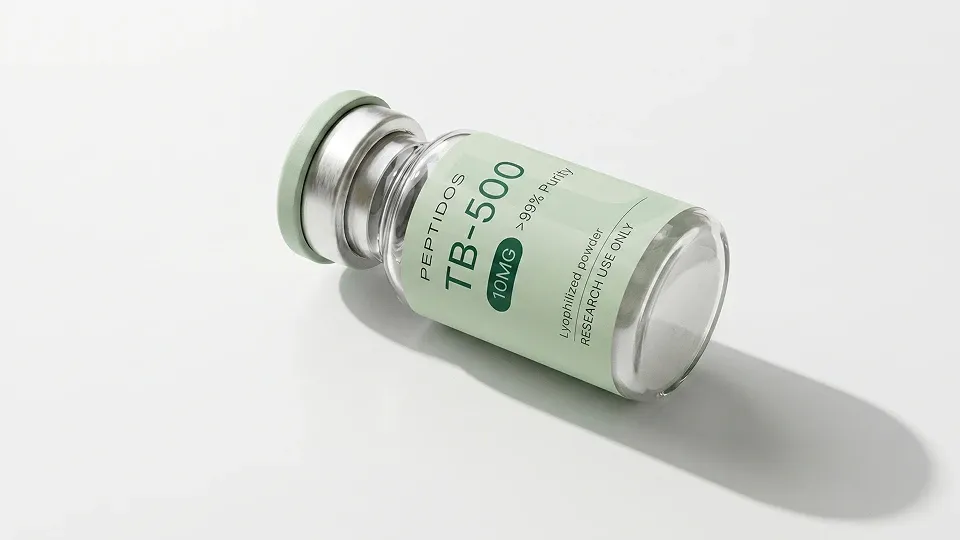
Where BPC-157 earned its reputation in the gut, TB-500 built its case across the entire body. Originally linked to the thymus gland and later found in nearly every cell type, this peptide has generated a remarkable body of preclinical research across wound healing, cardiac repair, neurological recovery, and even hair growth. In this article, the Peptidos Research Team breaks down what the science tells us, where the real clinical data stands, and what remains unanswered.
What Is TB-500?
TB-500 is a synthetic peptide based on thymosin beta-4 (Tβ4), a naturally occurring 43-amino acid protein first isolated from the thymus gland in the 1960s. While the two names are sometimes used interchangeably online, they are technically different molecules.
The full-length thymosin beta-4 contains 43 amino acids and is one of the most abundant intracellular proteins in mammalian cells. TB-500 in its strictest definition refers to a shorter 7-amino acid fragment (sequence: Ac-LKKTETQ) corresponding to the active region of thymosin beta-4, the part responsible for its actin-binding and cell-migration properties. However, in practice, many research suppliers and clinics sell the full 43-amino acid sequence under the TB-500 name, adding to the confusion.
What makes TB-500 special is its role as the body's primary actin-sequestering protein. Actin is a structural protein that forms the internal scaffolding of cells. By regulating how actin assembles and disassembles, TB-500 essentially controls how cells move, migrate, and reorganise, processes that are fundamental to healing damaged tissue.
Unlike many peptides, TB-500 is not confined to a single organ. It's present in high concentrations in platelets, white blood cells, and wound fluid, meaning the body naturally floods injury sites with it as one of the first responders to tissue damage.
What Has the Research Found?
The preclinical research on TB-500 spans more than three decades and covers an impressive range of organ systems. Here's what the key areas of investigation have shown.
Wound Healing and Tissue Repair
This is where TB-500 first made its name. In 1999, researchers demonstrated that the peptide accelerated wound closure, boosted new blood vessel formation, and sped up collagen deposition in rat skin wounds. The effect was visible as early as day 4 after treatment.
Since then, the findings have been replicated across multiple animal models, including diabetic mice, aged animals, and burn injury models. TB-500 appears to work through several simultaneous mechanisms: it promotes the migration of keratinocytes and endothelial cells into the wound bed, stimulates production of extracellular matrix-degrading enzymes (MMPs) that help remodel damaged tissue, and reduces scar-forming myofibroblast activity, meaning wounds may heal with less scarring.
Human clinical trials for dermal healing have been conducted as well. Phase 2 trials in patients with pressure ulcers, venous stasis ulcers, and epidermolysis bullosa wounds showed an encouraging trend toward faster healing compared to placebo, though the results did not reach statistical significance in all endpoints.
Heart Repair and Cardioprotection
This is arguably the most exciting area of TB-500 research. In a landmark 2004 study published in Nature, researchers showed that TB-500 promoted the migration and survival of heart muscle cells after coronary artery ligation in mice. The peptide formed a complex with integrin-linked kinase (ILK), activating the Akt survival pathway, essentially sending a strong "don't die" signal to oxygen-starved heart cells.
Subsequent studies confirmed that TB-500 reduced infarct size, decreased cardiac fibrosis and cell death, and increased blood vessel density in damaged heart tissue. Perhaps most remarkably, researchers demonstrated that TB-500 could reactivate dormant cardiac progenitor cells in the epicardium (the heart's outer lining), essentially reminding the adult heart of its embryonic regenerative program.
In 2016, a pilot human trial in China tested TB-500-pretreated stem cell transplantation in 10 patients who had suffered acute heart attacks. The experimental group showed improvements in cardiac function compared to controls, the first human evidence supporting TB-500's cardioprotective effects.
A larger UK trial (REGENERATE-IHD) later found that patients who received stem cell injections had significantly elevated plasma TB-500 levels 24 hours after treatment, and that this elevation directly correlated with improved cardiac symptoms at six months.
Eye Healing and Corneal Repair
TB-500 has progressed furthest in clinical development for eye conditions, particularly dry eye disease and neurotrophic keratopathy (NK), a rare condition involving persistent, non-healing corneal defects.
In Phase 2 trials for severe dry eye, topical TB-500 eye drops (RGN-259) produced statistically significant improvements: a 35% reduction in ocular discomfort and a 59% reduction in corneal staining compared to placebo, with effects persisting even 28 days after treatment ended.
In a Phase 3 trial for neurotrophic keratopathy, 60% of patients treated with TB-500 achieved complete healing of their corneal defects by day 29, compared to just 12.5% in the placebo group. While the small sample size meant the primary endpoint narrowly missed statistical significance (p = 0.0656), the clinical trend was substantial. TB-500 is currently being developed by ReGenTree as a potential competitor to the only FDA-approved NK treatment (Oxervate™).
Anti-Inflammatory Effects
Like BPC-157, TB-500 demonstrates consistent anti-inflammatory activity across multiple tissue types. In animal models, it reduces pro-inflammatory cytokines including TNF-α, IL-1β, and IL-6, suppresses NF-κB activation (a master switch for inflammatory cascades), and shifts macrophage behaviour toward an anti-inflammatory profile.
This isn't just a secondary benefit. It's likely a key mechanism behind the peptide's healing properties. By calming excessive inflammation without shutting it down entirely, TB-500 may help create the optimal conditions for tissue repair to proceed.
Brain and Nervous System
Emerging preclinical research suggests that TB-500 has genuine neuroprotective potential. In animal models of embolic stroke, the peptide significantly improved long-term neurological recovery at 56 days when administered 24 hours after the event. It has also shown positive results in models of traumatic brain injury, spinal cord injury, and multiple sclerosis (EAE).
The proposed mechanisms include promotion of oligodendrocyte development (cells that form the insulating myelin sheath around nerves), increased blood vessel formation in damaged brain tissue, and reduction of neuroinflammation.
Hair Growth
One of TB-500's more unexpected findings emerged serendipitously. While studying wound healing in rat skin, researchers at NIH noticed increased hair growth at wound margins after treatment with the peptide. Follow-up studies confirmed the effect: treated mice showed approximately twice the number of active hair follicles compared to controls.
The mechanism appears to involve activation and migration of hair follicle stem cells from the bulge region, combined with TB-500's pro-angiogenic effects that improve blood supply to follicles. While the hair growth findings are intriguing, they remain limited to animal models and have not yet been tested in human clinical trials for this specific indication.
The Human Evidence: More Advanced Than You'd Think
Compared to many peptides in the research space, TB-500 has a relatively substantial human safety record. Multiple Phase 1 trials have been completed:
- IV safety in healthy US volunteers (2010): Forty subjects were divided into four cohorts of ten, each cohort receiving a single ascending IV dose of either 42, 140, 420, or 1260 mg of synthetic TB-500 (or placebo). After safety review, subjects then received the same daily dose for 14 days. No dose-limiting toxicities or serious adverse events were observed across any cohort. The pharmacokinetic profile showed a dose-proportional response.
- IV safety in healthy Chinese volunteers (2021): Fifty-four subjects received single IV doses across seven ascending dose levels, and 30 subjects received multiple daily doses for 10 days. The peptide was well tolerated with only mild to moderate adverse events (headache and upper respiratory symptoms were most common). No significant accumulation was observed with repeated dosing.
- Cardiac pilot study (2016): Ten heart attack patients received TB-500-pretreated stem cell transplants, showing improved cardiac function versus controls.
- Dermal wound trials: Phase 2 trials across pressure ulcers, stasis ulcers, and epidermolysis bullosa showed healing trends favouring TB-500.
- Dry eye and corneal trials: Multiple Phase 2 and Phase 3 trials showed clinically meaningful improvements in ocular surface healing and symptom reduction.
Taken together, the human data, while still limited in scale, paints a consistent picture: TB-500 appears to be safe and well-tolerated across multiple administration routes and dosing regimens, with early signals of clinical efficacy in several therapeutic areas.
Regulatory Status
Neither the FDA nor the EMA has approved TB-500 as a medicine. The FDA classifies TB-500 as a Category 2 bulk drug substance (as of 2023), designating it as a compound that is not permitted for pharmaceutical compounding.
Like BPC-157, TB-500 is not a controlled substance in most jurisdictions. It can typically be purchased for research purposes, but it cannot legally be sold as a supplement, food, or medicine. In the US, the FDA has been increasingly active in sending warning letters to companies marketing peptides with therapeutic claims.
The World Anti-Doping Agency (WADA) prohibits TB-500 and its parent compound thymosin beta-4 under the category of "Peptide Hormones, Growth Factors, Related Substances, and Mimetics" as the peptides are classified as non-specified substances.
TB-500 vs. BPC-157: How Do They Compare?
Both peptides are frequently discussed together, and some practitioners combine them. While they share some overlapping properties (tissue repair, anti-inflammation), their origins and strengths differ:
TB-500 originates from the thymus and is found throughout the body. Its primary mechanism involves actin regulation and cell migration. It has the strongest preclinical evidence in cardiac repair, corneal healing, and hair growth, and has more advanced clinical trial data.
BPC-157 originates from gastric juice and works primarily through growth factor signalling (VEGF, FAK-paxillin). It has the strongest preclinical evidence in gastrointestinal healing and musculoskeletal repair, and uniquely retains oral bioavailability.
The two peptides appear to work through different but complementary pathways, which is why they are sometimes used together in research settings.
Key Takeaway on TB-500
TB-500 is one of the most well-studied regenerative peptides in biomedical research. More than three decades of preclinical data consistently point to powerful healing, cardioprotective, neuroprotective, and anti-inflammatory properties. Crucially, it is one of the few peptides in this space that has meaningful human clinical trial data, including multiple Phase 1 safety studies, Phase 2 efficacy trials for dermal and ocular conditions, and a Phase 3 trial in corneal disease. While large-scale confirmatory trials are still needed, the overall trajectory of evidence is strong. As clinical development continues, TB-500 remains one of the most credible candidates for breakthrough regenerative therapies.
Riferimenti
- Goldstein, A.L., Hannappel, E., Sosne, G. & Kleinman, H.K. (2012). "Thymosin β4: a multi-functional regenerative peptide. Basic properties and clinical applications." Expert Opinion on Biological Therapy, 12(1), 37–51.
- Bock-Marquette, I. et al. (2004). "Thymosin β4 activates integrin-linked kinase and promotes cardiac cell migration, survival and cardiac repair." Nature, 432, 466–472.
- Smart, N. et al. (2007). "Thymosin β4 induces adult epicardial progenitor mobilization and neovascularization." Nature, 445, 177–182.
- Malinda, K.M. et al. (1999). "Thymosin β4 accelerates wound healing." Journal of Investigative Dermatology, 113(3), 364–368.
- Philp, D., Goldstein, A.L. & Kleinman, H.K. (2004). "Thymosin β4 promotes angiogenesis, wound healing, and hair follicle development." Mechanisms of Ageing and Development, 125(2), 113–115.
- Sosne, G. et al. (2015). "Thymosin beta 4 significantly improves signs and symptoms of severe dry eye in a phase 2 randomized trial." Cornea, 34(5), 491–496.
- Goldstein, A.L. et al. (2023). "0.1% RGN-259 (Thymosin β4) Ophthalmic Solution Promotes Healing in Neurotrophic Keratopathy Patients in a Phase III Clinical Trial." International Journal of Molecular Sciences, 24(1), 554.
- Ruff, D. et al. (2010). "A randomized, placebo-controlled, single and multiple dose study of intravenous thymosin beta4 in healthy volunteers." Annals of the New York Academy of Sciences, 1194, 223–229.
- Han, C. et al. (2021). "A first-in-human, randomized, double-blind, single- and multiple-dose, phase I study of recombinant human thymosin β4 in healthy Chinese volunteers." Journal of Cellular and Molecular Medicine, 25(17), 8222–8228.
- Zhu, J. et al. (2016). "Safety and efficacy of autologous thymosin β4 pre-treated endothelial progenitor cell transplantation in patients with acute ST-segment elevation myocardial infarction." Cytotherapy, 18(8), 1037–1042.
- Morris, D.C. et al. (2014). "A Dose Response Study of Thymosin β4 for the Treatment of Acute Stroke." Journal of the Neurological Sciences, 345(1-2), 61–67.
- Philp, D. et al. (2003). "Thymosin β4 increases hair growth by activation of hair follicle stem cells." The FASEB Journal, 18(2), 371.
Autore

Peptidos
Team di ricerca
Siamo un team scandinavo di ricerca sulla longevità con oltre 15 anni di esperienza complessiva nello studio del ruolo dei peptidi nell'invecchiamento, nella salute cellulare, nello sviluppo muscolare e nelle prestazioni cognitive.
Iscriviti alla nostra newsletter
Articoli correlati
BPC-157: The "Body Protection Compound" - Research Summary 2026

Retatrutide Explained: Mechanism, Trial Data, and What It Means for Metabolic Health in 2026