Semax: The "Brain Protection Peptide" - Research Summary 2026
A research-based look at one of the most studied nootropic peptides in neuroscience, including how it works, what the clinical data actually shows, and where the science is heading in 2026.
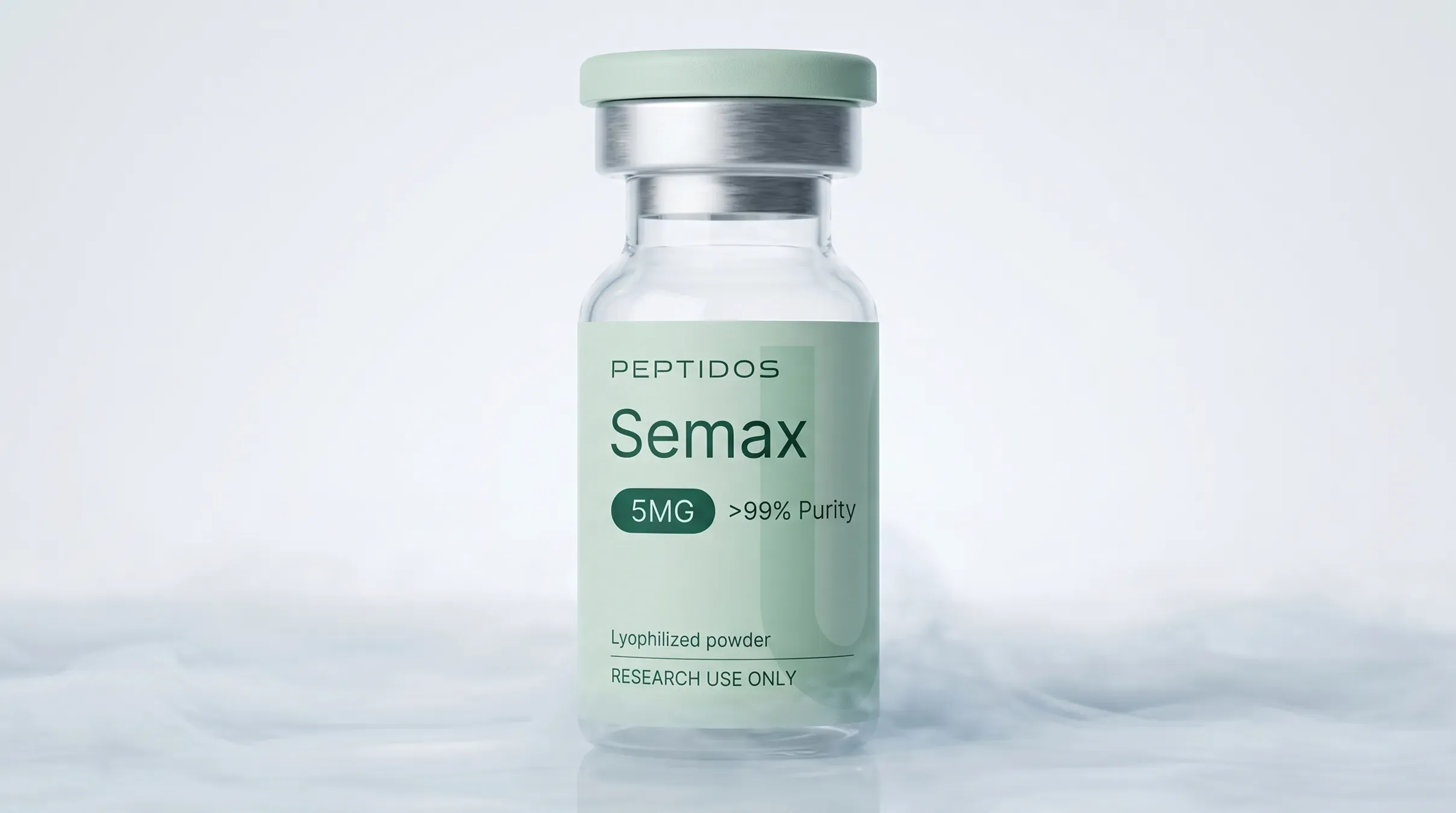
If you've spent time exploring the world of cognitive enhancement peptides, you've probably come across Semax. Developed by Soviet-era researchers for cosmonauts and military operators, this peptide has quietly accumulated one of the most impressive evidence bases of any nootropic compound in existence. In this article, Peptidos Research Team breaks down what the science actually tells us and where the gaps remain.
What Is Semax?
Semax is a synthetic heptapeptide - a chain of seven amino acids with the sequence Met-Glu-His-Phe-Pro-Gly-Pro. It was designed in the 1980s at the Institute of Molecular Genetics of the Russian Academy of Sciences by isolating the active fragment of adrenocorticotropic hormone (ACTH), specifically positions 4–7, and attaching a stabilizing Pro-Gly-Pro tripeptide tail to protect it from rapid enzymatic breakdown.
Here's what makes Semax unusual compared to most nootropic compounds: ACTH normally triggers cortisol release from the adrenal glands. Semax was specifically engineered to preserve the brain-supportive properties of the ACTH fragment while eliminating the hormonal cortisol response. You get the neurotrophic benefits without the adrenal stress - a distinction that matters enormously for anyone interested in long-term cognitive optimization.
Another practical advantage is its intranasal bioavailability. Unlike many peptides that require injection, Semax can be administered as a simple nasal spray and still reach the brain effectively.
What Has the Semax Research Found?
The body of research on Semax spans over three decades and hundreds of published studies. Here's what the key areas of investigation have revealed.
BDNF Upregulation: The Core Mechanism
Semax's defining feature is its effect on brain-derived neurotrophic factor (BDNF), the primary growth and survival signal for neurons. A single dose in rodents produced a 1.4-fold increase in BDNF protein and a 3-fold increase in BDNF mRNA in the hippocampus. For context, sustained aerobic exercise typically raises BDNF by 20–30%. A peptide that triples BDNF transcription through a different pathway is genuinely noteworthy.
This translates to humans: in a trial with 110 stroke patients, intranasal Semax significantly raised plasma BDNF levels, which correlated with faster functional recovery.
Neuroprotection and Stroke Recovery
Semax has its strongest human evidence here. It's been prescribed in Russia for acute ischemic stroke since the mid-1990s and sits on Russia's "Vital and Essential Drugs" list.
A placebo-controlled trial of 120 acute stroke patients found significant neurological improvement with intranasal Semax given within hours of onset. The mechanism involves BDNF/NGF upregulation, reduced oxidative stress, and calmed inflammation. Genome-wide analysis showed Semax modulated over 1,500 genes in ischemic brain tissue, shifting activity from inflammation toward repair.
Cognitive Enhancement
In a study of healthy operators after 8-hour shifts, Semax-treated subjects scored 71% accuracy on a memory test versus 41% in controls, with effects lasting 24 hours. A separate trial in medical students showed improved working memory and reaction time.
The effects work through dopamine (focus), serotonin (sustained effort), and acetylcholine (memory encoding) simultaneously. Crucially, Semax is not a stimulant. It works at the genomic level, changing what neurons express rather than flooding receptors. That means subtler but more sustainable effects, without crashes or tolerance buildup.
Alzheimer's Disease Research
A 2025 study in Alzheimer's model mice found Semax reduced amyloid plaque burden by 2.6-fold in both cortex and hippocampus, primarily by blocking new plaque formation. Separately, 2025 research showed Semax binds copper(II) ions and prevents amyloid-beta/copper complex formation, reducing toxic aggregation through a pathway completely independent of its neurotrophic effects. Two separate angles of attack.
Spinal Cord Injury
A 2025 study in the British Journal of Pharmacology found Semax improved functional recovery in spinal cord injury models by targeting the mu opioid receptor gene Oprm1, reducing lysosomal membrane damage that worsens neuronal death after trauma.
Mood and Stress Resilience
In chronic stress animal models, Semax prevents depressive-like behaviors, maintains hippocampal neurogenesis, and normalizes HPA axis function. These effects connect to its dopamine/serotonin modulation and the broader brain-gut axis.
The Human Evidence: More Substantial Than Most Peptides
Unlike many peptides popular in the biohacking space, Semax has been used in clinical medicine for over 25 years. It's been prescribed to hundreds of thousands of patients in Russia and Eastern Europe for conditions including ischemic stroke, traumatic brain injury, optic nerve atrophy, cognitive impairment, and peptic ulcers.
Key human data points include:
- Stroke rehabilitation (2018): 110 patients after ischemic stroke received intranasal Semax (6,000 mcg/day) in two 10-day courses. Semax raised BDNF levels regardless of rehabilitation timing, and those levels correlated with faster recovery and better functional outcomes.
- Acute stroke clinical trials: A placebo-controlled trial of 120 acute stroke patients showed significant neurological improvement with high-dose intranasal Semax administered within hours of symptom onset.
- Cognitive enhancement (1996): Healthy human subjects given intranasal Semax showed EEG changes consistent with nootropic drug effects, with improved work efficiency lasting 20–24 hours after a single dose.
- fMRI pilot study: 24 healthy subjects received intranasal 1% Semax (total dose 1.2 mg). The peptide increased resting fMRI signal in the default mode network compared to placebo, providing objective neuroimaging evidence of central nervous system effects at clinically relevant doses.
- Glaucoma patients: Intranasal 0.1% Semax has been used for up to 30 days in adult glaucoma patients for optic nerve support.
While these results represent more human evidence than most research peptides, the important caveat remains: large-scale, Western-standard randomized controlled trials have not yet been conducted.
Safety Profile
No clinical or preclinical trials have reported serious adverse events. The most common side effects are mild: nasal irritation, occasional headache, and sleep disruption if taken late in the day. Some individuals report temporary anxiety from dopaminergic activation.
Semax does not appear to produce tolerance. Stroke recovery protocols have used daily dosing for 60–90 days without diminishing efficacy, consistent with its genomic (rather than receptor-based) mechanism. It also does not cause dependence or withdrawal.
Regulatory Status
Semax occupies a unique regulatory position. In Russia and Ukraine, it's an approved prescription medication, available as a 0.1% nasal spray for general nootropic use and a 1% solution for more intensive clinical applications like stroke recovery.
In the United States, Semax has never been evaluated or approved by the FDA. In late 2023, the FDA placed it on the Category 2 restricted list, effectively preventing compounding pharmacies from preparing it. However, on February 27, 2026, HHS Secretary Robert F. Kennedy Jr. announced that Semax is among approximately 14 peptides expected to be reclassified back to Category 1 - restoring legal access through licensed compounding pharmacies with a physician's prescription. As of April 2026, the formal FDA publication of this change is still pending, but the policy direction is clear.
In the European Union, Semax has no authorization as a medicine. It is not a controlled substance in most EU member states, so it can legally be purchased and possessed for research purposes in many countries, but it cannot be marketed as a supplement or medication.
It's worth noting that Semax is not on the WADA prohibited list, which distinguishes it from some other performance-related peptides.
Key Takeaway on Semax So Far
Semax stands out in the peptide landscape for an unusual combination of qualities: a well-characterized molecular mechanism centered on BDNF upregulation, decades of clinical use in a major healthcare system, an expanding preclinical evidence base that keeps revealing new applications, and a safety profile that inspires genuine confidence. Its effects on neuroprotection during stroke are backed by the strongest evidence, while its cognitive enhancement, Alzheimer's disease, and mood-related applications represent the most exciting frontiers. As Western regulatory pathways reopen and international research groups take a closer look, Semax may prove to be one of the most significant neuroprotective compounds of our era.
References
- Dolotov, O.V. et al. (2006). "Semax, an analog of ACTH(4-10) with cognitive effects, regulates BDNF and trkB expression in the rat hippocampus." Brain Research, 1117(1), 54–60. PMID: 16996037.
- Ilchibaeva, T.V. et al. (2025). "The Potential of the Peptide Drug Semax and Its Derivative for Correcting Pathological Impairments in the Animal Model of Alzheimer's Disease." Acta Naturae. PMC12755871.
- Dmitrieva, V.G. et al. (2010). "Semax and Pro-Gly-Pro Activate the Transcription of Neurotrophins and Their Receptor Genes after Cerebral Ischemia." Cellular and Molecular Neurobiology, 30(1), 71–79. PMC11498467.
Author

Peptidos
Research Team
We are a Nordic longevity research team with 15+ years of combined experience studying peptides' role in aging, cellular health, muscle growth, and cognitive performance.
Sign up to our newsletter